

Is Tallow Balm Worth the Cost? A UK Value Review
Last Updated: November 12, 2026
Quick Summary
Yes, tallow balm is worth the cost for most people, but only once you compare price per use rather than price per tin. A water-free balm costs 3p-17p per application at Tarro, so a £10 tin can outlast a £4 water-based cream.
- A 100g Bare Skin Balm at £10.00 works out at 3p-5p per application.
- A £4 moisturiser is mostly water, while a water-free balm is all oil, wax and fat.
- Moisturising and softening rough patches are the claims with the strongest evidence.
- Treating eczema, reversing ageing and healing wounds are unsupported claims.
- Start with one 30g tin at £10.00 and use it for a month before buying more.
Is a £10 tallow balm actually cheaper per use?Traceable British grass-fed tallow balms, handmade in small batches with plant oils.
Shop Tallow Balms
Table of Contents
- What You Actually Pay For in a Tallow Balm
- Tallow Balm Benefits and Drawbacks: An Evidence-Graded Look
- Tallow vs Plant-Based Moisturisers for Face: Where Each One Wins
- Tallow Balm Ingredients: What Separates a Good Jar from a Cheap One
- How Long Does Tallow Balm Last? Shelf Life, Storage and Value Over Time
- Who Should Avoid Tallow Balm
- Matching a Tallow Balm to Your Skin and Budget
- Choosing Your First Tallow Balm
- Frequently Asked Questions
What You Actually Pay For in a Tallow Balm
Is tallow balm worth the cost? For most people weighing a £10 tin against a £4 tube, the honest answer is yes, but only once you compare price per use rather than price per tin. At Tarro, we make every balm from grass-fed British tallow and plant oils, and we would rather show you the maths than the marketing. A balm that costs more upfront often costs less per application, because you use a fraction of the amount.
Global market figures suggest the category is growing. Fortune Business Insights market forecast values the tallow balm market at USD 280 million in 2025, rising to USD 290 million in 2026 and USD 460 million by 2034. Growth is not proof of value, though. The rest of this review works out what you are actually buying.
The Cost-Per-Use Maths Most Reviews Skip
Most reviews quote the tin price and stop there. What matters is cost per application, and a water-free balm behaves very differently from a water-based cream.
Here is the calculation, using our own range as the worked example:
| Product | Size | Price | Approx. applications | Cost per use |
|---|---|---|---|---|
| Bare Skin Balm | 30g | £10.00 | 60-90 | 11p-17p |
| Bare Skin Balm | 100g | £10.00 | 200-300 | 3p-5p |
| Little and Large Balm Bundle | 80g + 30g | £26.00 | 220-330 | 8p-12p |
| Typical water-based face cream | 50ml | £4.00 | 50-70 | 6p-8p |
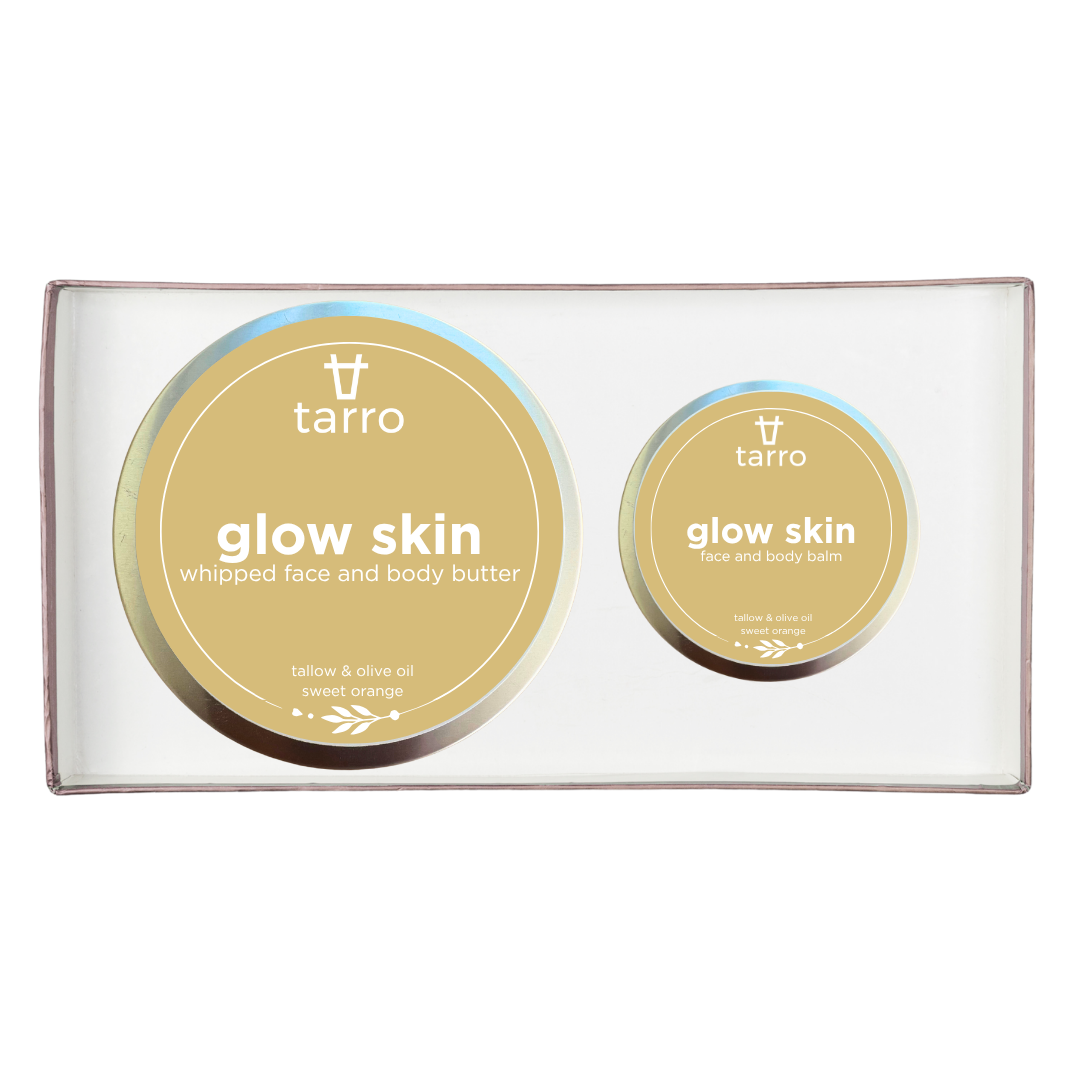
If you want the bundle that lowers the price per gram, shop the Little and Large Balm Bundle.
Why a £10 Tin Can Outlast a £4 Tube
A £4 moisturiser is mostly water. That is chemistry, not a criticism: water carries humectants into the skin and evaporates. A water-free balm carries no water at all, so every gram is oil, wax and fat doing the sealing work.
Cost per application of tallow balms vs a water-based face cream
Bare Skin Balm 30g 11p-17p
Bare Skin Balm 100g 3p-5p
Little and Large Balm Bundle 8p-12p
Typical water-based face cream 6p-8p
Tallow Balm Benefits and Drawbacks: An Evidence-Graded Look
The useful question is not whether tallow is 'good' or 'bad' but which specific claims hold up. Below is a claim-by-claim grading: supported (consistent with established skin science), plausible but unproven (mechanistically sensible, lacking direct trials), and unsupported (no credible evidence, or contradicted by what is known).
Claim-by-Claim Grading
| Claim | Grade | What the evidence actually shows |
|---|---|---|
| Moisturises and reduces dryness | Supported | Tallow is rich in oleic, palmitic and stearic acids and behaves as an occlusive emollient, slowing water loss from the skin surface. This is the same mechanism as many established moisturisers, and it is the claim with the strongest basis. |
| Softens and smooths rough patches | Supported | Occlusive and emollient ingredients temporarily plump the outer layer and reduce flaking. The effect is real but lasts only while the product is used. |
| Suits mature skin that produces less sebum | Plausible but unproven | The fatty-acid profile resembles human sebum, which is a reasonable rationale, but there are no controlled trials showing tallow outperforms standard moisturisers in older skin. |
| Less greasy than its density suggests | Plausible but unproven | Anecdotal reports are consistent, and the fatty-acid profile offers a mechanism, but this is a sensory claim that has not been measured in studies. |
| Treats eczema | Unsupported | A dermatology source cited by Scenic Dermatology's review of tallow for skin notes that tallow balm may help some people with eczema-prone skin feel less dry, but has not been shown to control eczema better than established moisturisers. It is a comfort product, not a treatment. |
| Reverses ageing or boosts collagen | Unsupported | No credible evidence supports collagen production or anti-ageing claims for tallow. Anyone selling you collagen claims is selling you something else. |
| Heals wounds or treats skin conditions | Unsupported | There is no trial evidence for wound healing or condition treatment. Occlusion may support the skin barrier, but that is not the same as treating a condition. |
What the Research Supports, What It Doesn't, and What to Ignore
A literature review in the Journal of Cosmetic Dermatology examined claims that tallow is more biocompatible with skin than plant-based and manufactured products, and framed that as a claim to investigate rather than an established conclusion. That is an accurate summary of where the science sits.
What to ignore is social proof dressed as science. A 2025 study on beef tallow skincare claims in social media reported that many promotions of beef tallow skincare are associated with financial bias, and called for further research on long-term effects. That does not make the products bad. It means the testimonials you see are not neutral evidence.
Drawbacks Worth Weighing
The drawbacks are practical rather than dramatic. The occlusion that helps dry skin can feel heavy on oily or acne-prone skin. Some people may dislike a faint animal scent. And the cost is higher upfront than a budget cream.
For a longer breakdown of what grass-fed tallow does and does not do for skin, read our evidence guide to grass-fed tallow for skin.
Tallow vs Plant-Based Moisturisers for Face: Where Each One Wins
Tallow wins on occlusion and skin feel for dry, mature skin. Plant oils win on lightness, scent variety and suitability for oily or breakout-prone skin. Neither wins outright, and anyone telling you otherwise is oversimplifying.
A narrative review in the Journal of Dermatology and Skin Science comparing beef tallow with plant oils compared beef tallow with coconut, olive, jojoba and argan oils across environmental considerations, and the supplied result states no quantified outcome. The comparison is genuinely unresolved.
Where tallow has a practical edge: it holds its structure at room temperature, so it stays where you put it. Where plant oils have the edge: jojoba and squalene-based formulas absorb faster on oily skin and carry less risk of congestion. If you are weighing the two directly, our tallow versus plant-based moisturiser comparison goes deeper than this review can.
Tallow Balm Ingredients: What Separates a Good Jar from a Cheap One
A short ingredient list is the single best indicator of a good tallow balm. Tallow, one or two plant oils, maybe beeswax, and vitamin E. That is the whole formula in most well-made balms, including ours.
At Tarro, we only use British grass-finished tallow, and it is traceable right back to the farm. Our formulation is done by a certified organic skincare formulator, which is a credential buyers may not know to look for, it means the ratios were set by someone trained to set them, not guessed.
Sourcing, Purity and the Traceability Question
Traceability is the claim most brands make and few can evidence. Ask three questions before you buy: which farm, what the cattle ate, and who rendered the fat. A brand that cannot answer all three is using the word loosely.
Our packaging is recyclable and reusable, and we work with farms around the UK to build a farm-to-skin tallow skincare range. For a step-by-step guide to buying genuine grass-fed tallow balm, read how to buy grass-fed tallow balm online.
How Long Does Tallow Balm Last? Shelf Life, Storage and Value Over Time
Every Tarro balm carries a use-within-12-months-of-opening guide.
Keep the tin closed and out of direct sunlight.
Who Should Avoid Tallow Balm
Tallow balm is not for everyone, and we would rather say so than sell you a tin you regret.
- People who dislike a faint animal scent should choose a fragrance-free or essential-oil-scented balm and check the label. Our Bare Skin Balm is fragrance-free by design.
Matching a Tallow Balm to Your Skin and Budget
Match the balm to the skin first, then the budget. A cheap balm that does not suit your skin is the most expensive purchase you can make. The framework below uses the same criteria across skin types so you can compare products on substance rather than anecdote.
A Skin-Type Decision Framework
| Skin type | What to look for | What to avoid | Why |
|---|---|---|---|
| Dry or mature | A richer balm with olive oil or sweet almond oil; a dense texture that holds at room temperature | Very light whipped formulas that may not occlude enough | Less sebum production means the sealing effect does more work |
| Combination | A whipped texture that absorbs faster; a short ingredient list | Heavy beeswax-heavy balms that sit on the surface | Balance between occlusion and lightness |
| Oily or acne-prone | A lighter plant oil formula, or skip tallow altogether | Dense, occlusive balms | Occlusion can be counterproductive on already oily skin |
| Sensitive or allergy-prone | Fragrance-free, short ingredient list, patch-test first | Essential-oil-scented balms, long ingredient lists | Fewer ingredients means fewer potential triggers |
| Hands and heels | A dense balm with beeswax | Thin lotions | Needs to last through washing |
Budget Verdict by Use Case
A 30g tin at £10.00 is a low-commitment way to try a balm. The 100g tin is £10.00 and the Little and Large Balm Bundle is £26.00 for one 80g and one 30g balm.
Watch out: buying a large tin before you know your skin tolerates tallow is the most common way to waste money on a balm you never finish.
Standardised Comparison Criteria
If you are ready to choose, browse the full tallow skincare range and compare the textures side by side.
Choosing Your First Tallow Balm
Start with one small tin, not a full routine. A 30g balm at £10.00 is a low-commitment way to try tallow. Use it for a month before you decide anything else.
If it suits you, move to the larger size for the cost-per-use saving, and consider the bundle if you want one balm at home and one in a bag. Keep it simple: one balm, one cleansing routine, and a month of patience.
Concentrated skincare only looks expensive until you count the applications. We make every Tarro balm from traceable British grass-fed tallow, formulated by a certified organic skincare formulator, in packaging you can recycle and reuse. Get started with Tarro and find the balm that earns its place on your shelf.
Frequently Asked Questions
Is tallow balm worth the cost compared with a standard moisturiser?
It depends on how dry your skin is and how much you use per application. A 30g tin of tallow balm costs £10. If you have persistently dry or tight skin and want a rich balm that seals in moisture, it may be worth trying. If your skin is already comfortable with a lighter lotion, tallow balm may not be necessary.
How long does a jar of tallow balm last?
Tarro's balms carry a use-within-12-months-of-opening guide, which is typical for water-free balms. Finish the tin within the 12-month window once opened.
Can tallow balm clog pores or cause breakouts?
Tallow is rich in oleic, palmitic and stearic acids, which closely mirror the fatty acid profile of human sebum. Any rich, water-free balm can feel heavy on very oily skin.
What should you look for in a good-quality tallow balm?
Start with the ingredient list: it should name tallow first, then plant oils and any essential oils, with no vague 'fragrance' or filler ingredients. Ask where the tallow comes from. At Tarro, we only use British grass-finished tallow and can trace it back to the farm. Finally, look for a clear use-by window after opening.


