

Is Grass-Fed Tallow Good for Your Skin?
Last Updated: October 25, 2026
Quick Summary
Grass-fed tallow moisturises skin by forming a lipid layer that slows moisture loss, and its fatty acids closely mirror those in human sebum. It suits dry, sensitive and mature skin, but it lacks ceramides, so it seals dry skin rather than repairing the barrier. Patch test first, as it may clog pores or trigger breakouts.
- Rendering is gently heating raw fat at low temperature to separate it from tissue and water.
- A 2024 review found tallow alone had the greatest moisturising impact in one cited comparison.
- Warm a pea-sized amount between fingertips and press into damp skin as your evening routine's last step.
- Start with a thin layer every other evening for the first week before building to nightly use.
- Our Bare Skin Balm is a no-water, no-fragrance balm made with pasture-fed British tallow, jojoba, olive oil, olive squalane and beeswax.
Table of Contents
- What Grass-Fed Tallow Is and Why It's Used on Skin
- Potential Benefits of Grass-Fed Tallow for Skin
- Grass-Fed vs Grain-Fed Tallow: What's the Difference?
- How to Use Tallow on Face (and Where It Fits in Your Routine)
- Tallow for Mature Skin: What to Expect
- Tallow Balm Side Effects and Who Should Be Cautious
- How Grass-Fed Tallow Compares With Evidence-Backed Moisturisers
- Choosing a Tallow Balm That Fits Your Skin
- Frequently Asked Questions
What Grass-Fed Tallow Is and Why It's Used on Skin
Grass-fed tallow is rendered beef fat from cattle raised on pasture, and it has become one of the most talked-about ingredients in natural skincare.
That similarity is why the benefits of grass fed tallow for skin keep coming up in conversations about dry, sensitive and mature skin. It is not a new ingredient, just an old one that fell out of fashion when synthetic moisturisers arrived.
How Tallow Is Rendered and Sourced
Rendering is the process of gently heating raw fat to separate it from connective tissue and water. Done slowly and at low temperature, the result is a clean, shelf-stable fat with a mild scent. Sourcing matters more than most buyers realise: pasture-fed cattle produce a different fatty acid balance from grain-fed animals, and small-batch rendering preserves more of the fat's natural character than industrial processing.
Fatty Acid Profile and Skin Compatibility
Tallow is rich in oleic, palmitic and stearic acids, the same fatty acids found in human sebum. A 2024 review of rendered animal fat and its biocompatibility with skin noted potential moisturising and hydrating properties, and found tallow alone had the greatest moisturising impact in one cited comparison. That is promising, though the evidence base remains small.
Potential Benefits of Grass-Fed Tallow for Skin
The honest answer is that tallow can moisturise well, but it is not a cure-all. Most of what people report comes down to two things: it holds water in the skin, and it feels comfortable on dry patches.
Moisture Retention and Hydration
Tallow forms a lipid layer that slows moisture loss from the surface of the skin. For anyone with dry or tight-feeling skin, that occlusive effect is the main draw. It is why a small amount goes a long way, and why balms suit cold weather and harsh conditions better than lightweight lotions.
Skin Barrier Support and Soothing Dry Skin
Here is where claims often outrun evidence. Tallow can moisturise, but as MD Anderson's guidance on beef tallow points out, it does not contain ceramides, the lipids used to aid skin-barrier repair. Think of tallow as a comfortable seal over dry skin, not a replacement for proven barrier ingredients.
Grass-Fed vs Grain-Fed Tallow: What's the Difference?
The difference comes down to diet, and diet changes the fat. Pasture-fed cattle generally produce tallow with a different balance of fatty acids and fat-soluble vitamins than grain-fed animals, and the rendering method affects purity.
| Factor | Grass-Fed Tallow | Grain-Fed Tallow |
|---|---|---|
| Fatty acid balance | More varied, pasture-influenced | Typically higher in omega-6 |
| Traceability | Easier to verify farm of origin | Often blended from multiple sources |
| Rendering | Usually small-batch | Frequently industrial |
| Best for | Traceable, small-batch balms | Mass-market products |
Neither is unsafe. Grass-fed simply gives you more confidence about what you are putting on your skin.
What "Grass-Fed" Actually Means on a Label
"Grass-fed" is not a single, legally defined skincare standard in the same way some food labels are. On a balm, it is a sourcing claim, and the useful question is not whether the words appear but whether the producer can back them up. A credible grass-fed claim should be traceable to a named farm or producer group.
How to Verify Sourcing and Product Quality
Rather than relying on the broad grass-fed claim, check these details before buying:
- Named origin: the farm or producer group should be identifiable, not described only as "British" or "pasture-fed".
- Rendering detail: small-batch, low-temperature rendering is usually stated explicitly; industrial rendering is rarely mentioned at all.
- Full ingredient list: short lists are easier to assess. Watch for added fragrance, essential oils or preservatives if your skin is reactive.
Grass-Fed Status and the Wider Picture
Grass-fed is not automatically the same as organic, higher-welfare or lower-impact. Pasture-based systems can support soil health and animal welfare, but the overall environmental and ethical picture depends on the farm, the season, the feed and the supply chain. Treat grass-fed as one useful signal among several, not a guarantee of sustainability or welfare on its own.
Does the Difference Matter for Your Skin?
The honest answer is that the evidence comparing grass-fed and grain-fed tallow specifically on skin outcomes is thin. The fatty acid and vitamin differences are real, but no robust human trials isolate grass-fed tallow as the variable. What you can reasonably expect is a product with a clearer supply chain and, often, gentler processing.
How to Use Tallow on Face (and Where It Fits in Your Routine)
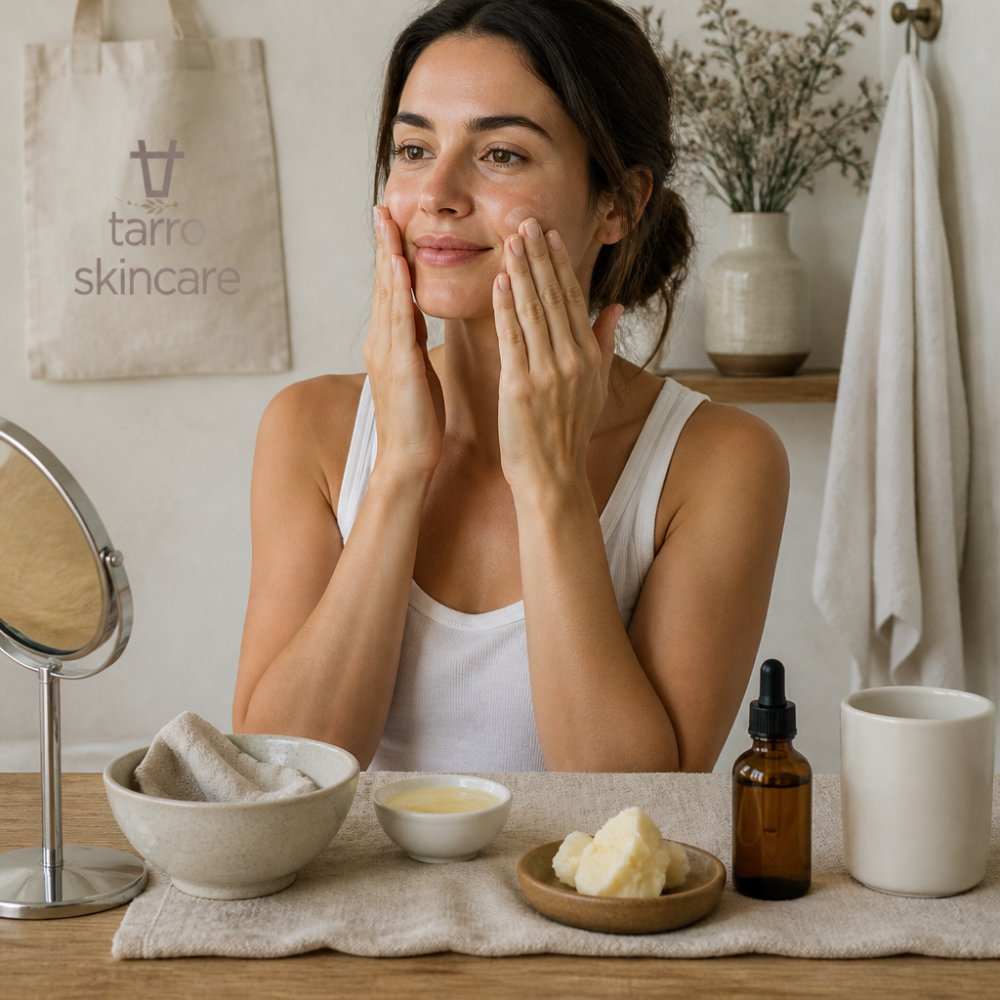
Use tallow balm as the last step in your evening routine, after cleansing and any water-based serums. Warm a pea-sized amount between your fingertips until it melts, then press it gently into damp skin rather than rubbing.
If you are wondering whether it sinks in or sits on top, our guide to whether tallow balm absorbs into skin explains what to expect.
Tallow for Mature Skin: What to Expect
Mature skin tends to be drier and thinner, so a rich, lipid-heavy balm often feels welcome. Expect softer, more comfortable skin within a few days of consistent use, particularly on cheeks, hands and around the eyes where dryness shows first.
For a closer look at how tallow suits older skin, read our full guide to the benefits of tallow for mature skin.
Tallow Balm Side Effects and Who Should Be Cautious
Tallow balm side effects are uncommon but real. The Cleveland Clinic's review of beef tallow for skin notes there is no evidence that beef tallow is good for skin, and warns it may clog pores or trigger breakouts, irritation or allergic reactions. That matters most for oily and acne-prone skin.
A Step-by-Step Patch Test
A patch test is the simplest way to reduce the risk of a reaction. It is not foolproof, but it catches many sensitivities before they reach your face.
- Choose a test site: the inner forearm or the side of the neck is standard. Avoid broken, inflamed or recently shaved skin.
- Apply a small amount: about the size of a grain of rice, spread thinly and left uncovered.
- Leave it for 24 hours: do not wash the area. Note any redness, itching, stinging or swelling.
- Repeat for two to three days: some reactions are delayed. Apply to the same site each day and check morning and evening.
- Stop if you react: wash the area with lukewarm water and a mild cleanser. If swelling, blistering or breathing difficulty occurs, seek urgent medical help.
A patch test does not guarantee you will never react, and it does not test for every possible sensitivity. If you have a known allergy to beef, dairy or lanolin, speak to a pharmacist before using a tallow balm.
Frequency and Introduction Guidance
Start with a thin layer every other evening for the first week, then build to nightly use if your skin is comfortable. Apply to one area first, a cheek or the back of the hand, rather than the whole face. If you are using an active ingredient such as a retinoid or an acid exfoliant, introduce tallow on alternate nights to avoid overloading the skin.
Signs You Should Stop Using It
Stop applying the balm and seek advice if you notice:
- persistent redness, itching or stinging that does not settle within a day or two;
- new or worsening breakouts, especially in clusters;
- swelling, hives or a spreading rash;
Acne-Prone and Oily Skin
Tallow is occlusive, which is helpful for dry skin but can be counterproductive for oily or acne-prone skin. If you are prone to congestion, use the lightest layer possible, keep it away from the T-zone at first, and stop if you see new blocked pores. A patch test on the jawline is a reasonable compromise before committing to the full face.
Eczema, Rosacea and Damaged Skin
Tallow may soothe dryness, but it is not a treatment for eczema, rosacea or broken skin. If your skin is inflamed, itching, weeping or cracked, speak to a pharmacist or GP before applying any new balm. Prescribed emollients and topical treatments have evidence behind them that tallow does not, and a rich balm can occasionally trap heat or irritate compromised skin.
Children and Around the Eyes
Children's skin is thinner and more reactive, so patch test first and keep the balm away from the eye area. Around the eyes, use only a trace amount on the orbital bone, not on the lid margin or lashes, and stop if you notice puffiness or irritation.
Tallow is a comfort product, not a medicine. Patch test, introduce slowly, and see a pharmacist or GP if your skin is inflamed or you suspect an allergy.
How Grass-Fed Tallow Compares With Evidence-Backed Moisturisers
Tallow holds its own on moisturising, but it is not the strongest option for every job.
If you are weighing the two, our comparison of tallow versus plant-based moisturisers for dry, sensitive skin sets out the trade-offs in detail. Our view: tallow is a good daily moisturiser for dry skin, not a replacement for prescribed treatment.
Choosing a Tallow Balm That Fits Your Skin
Start with your skin type, not the label. For a rundown of the best grass-fed tallow skincare brands for deep hydration, see our comparison.
Our Bare Skin Balm is a no-water, no-fragrance balm made with pasture-fed British tallow, jojoba, olive oil, olive squalane and beeswax.

Best for: dry, mature or sensitive skin seeking a simple, traceable balm. Skip if: your skin is oily, acne-prone or currently inflamed.
Frequently Asked Questions
Is grass-fed beef tallow actually good for your skin?
The evidence is promising but limited. A 2024 review of rendered animal fat reported that tallow had the greatest moisturising impact in one cited comparison, and that emulsions combining mutton tallow and walnut oil improved skin hydration. That said, the review did not establish that these findings apply specifically to grass-fed beef tallow, and no sample sizes were given. Cleveland Clinic states there is no evidence beef tallow is good for skin. Treat grass-fed tallow as a rich, occlusive moisturiser rather than a proven treatment.
Can tallow balm clog pores or cause breakouts?
It can. Cleveland Clinic warns that beef tallow may clog pores or cause breakouts, irritation or allergic reactions. Tallow is high in oleic acid, which suits drier skin better than oily or acne-prone skin. If you have acne-prone skin, patch test on your jawline for 48 hours before applying to your full face, and stop if you see new congestion. Lighter, whipped balms applied sparingly are less likely to feel heavy than solid balms used generously.
How do you use tallow on your face without it feeling greasy?
Apply it last in your routine, after cleansing and any water-based products. Warm a pea-sized amount between your fingertips until it melts, then press it into damp skin rather than rubbing. Use it at night if you wear makeup or SPF during the day. A whipped balm absorbs more readily than a solid one. Bare Skin Balm, for example, is a firm but spreadable balm that melts on contact and absorbs gradually into a soft, non-greasy layer when used sparingly.
Is grass-fed tallow better for skin than grain-fed tallow?
There is no clinical evidence comparing grass-fed and grain-fed tallow on skin outcomes. The case for grass-fed is about sourcing and traceability rather than proven dermatological superiority. Grass-fed cattle tend to have a different fatty acid profile, but no study in the available research confirms a skin benefit difference. What matters more in practice is purity, how the tallow is rendered, and whether the finished balm suits your skin type.
What are the disadvantages of tallow balm?
The main drawbacks are comedogenicity for oily and acne-prone skin, the risk of irritation or allergic reaction, and the absence of ceramides. MD Anderson notes that tallow can moisturise but does not contain ceramides, which are used to moisturise and aid skin-barrier repair. Tallow balms also tend to be heavy, so they suit evening use better than daytime wear under makeup. Anyone with sensitive skin should patch test first.
Can tallow balm help dry or mature skin?
It is well suited to dry and mature skin because its fatty acid profile closely mirrors human sebum. Tallow is rich in oleic, palmitic and stearic acids, which helps it absorb without sitting heavily on the surface. For mature skin, the appeal is moisture retention rather than anti-ageing claims: a lipid-rich balm helps reduce moisture loss and leaves skin feeling soft and comfortable. Apply to damp skin at night for the best results.
The challenge with tallow is separating genuine benefits from marketing noise, and that starts with knowing exactly what is in the tin. Tarro makes that easier: grass-fed tallow sourced from British farms, lipid-rich formulations that support the skin's natural barrier, and short ingredient lists you can actually read. Start with a patch test, then build a routine around one or two balms. Get started with Tarro and give dry, uncomfortable skin the simple, traceable care it deserves.


