

How to Use a Cleansing Balm on Sensitive Skin in 2026
Quick Summary
A cleansing balm suits sensitive skin when you apply it to dry skin, massage gently for 20 to 30 seconds, emulsify with a few drops of lukewarm water, then rinse and pat dry. Choose a fragrance-free formula with a short ingredient list, and patch test it on the inner forearm for three to five days before using it on your face.
- Apply a pea-sized amount of cleansing balm to dry skin, not wet skin.
- Massage gently for 20 to 30 seconds using light circular motions.
- Add a few drops of lukewarm water so the balm turns milky, then rinse.
- Patch test the new balm on the inner forearm or behind the ear for three to five days.
- Stop using the balm if tightness, stinging or redness lasts beyond a few minutes.
Table of Contents
- Why Sensitive Skin Needs a Gentle Cleanser
- How to Use Cleansing Balm Without Stripping Your Barrier
- Cleansing Balm Ingredients to Avoid for Sensitive Skin
- Cleansing Balm Versus Oil, Milk and Micellar Water
- Double Cleansing Sensitive Skin: When It Helps and When It Harms
- Building a Skin Barrier Repair Routine
- Choosing Your Tarro Balm for a Calmer Routine
- Frequently Asked Questions
Sensitive skin reacts to almost anything, so a cleansing balm can feel like a gamble. This guide explains how to use one without stripping your barrier, which products to avoid, and how to patch test before committing.
Cleansing balms are a practical starting point for many people with reactive skin. They melt on contact with the skin and lift makeup and sunscreen with little rubbing. The right technique matters as much as the product itself.
Why Sensitive Skin Needs a Gentle Cleanser
Sensitive skin has a weaker barrier, which means it loses moisture faster and reacts sooner to harsh surfactants. Research published in the Journal of Clinical and Aesthetic Dermatology notes that new cleanser formulations are designed specifically to support the skin barrier in people with sensitive skin (Journal of Clinical and Aesthetic Dermatology research on sensitive skin cleansers).
A gentle cleanser removes dirt and makeup without disrupting the lipid layer that holds moisture in. Strong foaming cleansers often leave skin tight and red, which is the opposite of what a reactive complexion needs. Liquid cleansers have also been shown to be effective and well tolerated on sensitive skin, and they can be used alongside topical treatments (PMC review on liquid facial cleansers for sensitive skin).
How to Use Cleansing Balm Without Stripping Your Barrier
The main risk with a cleansing balm is over-working it. Use a small amount, keep the massage short, and rinse with lukewarm water rather than hot. Pat dry rather than rubbing.
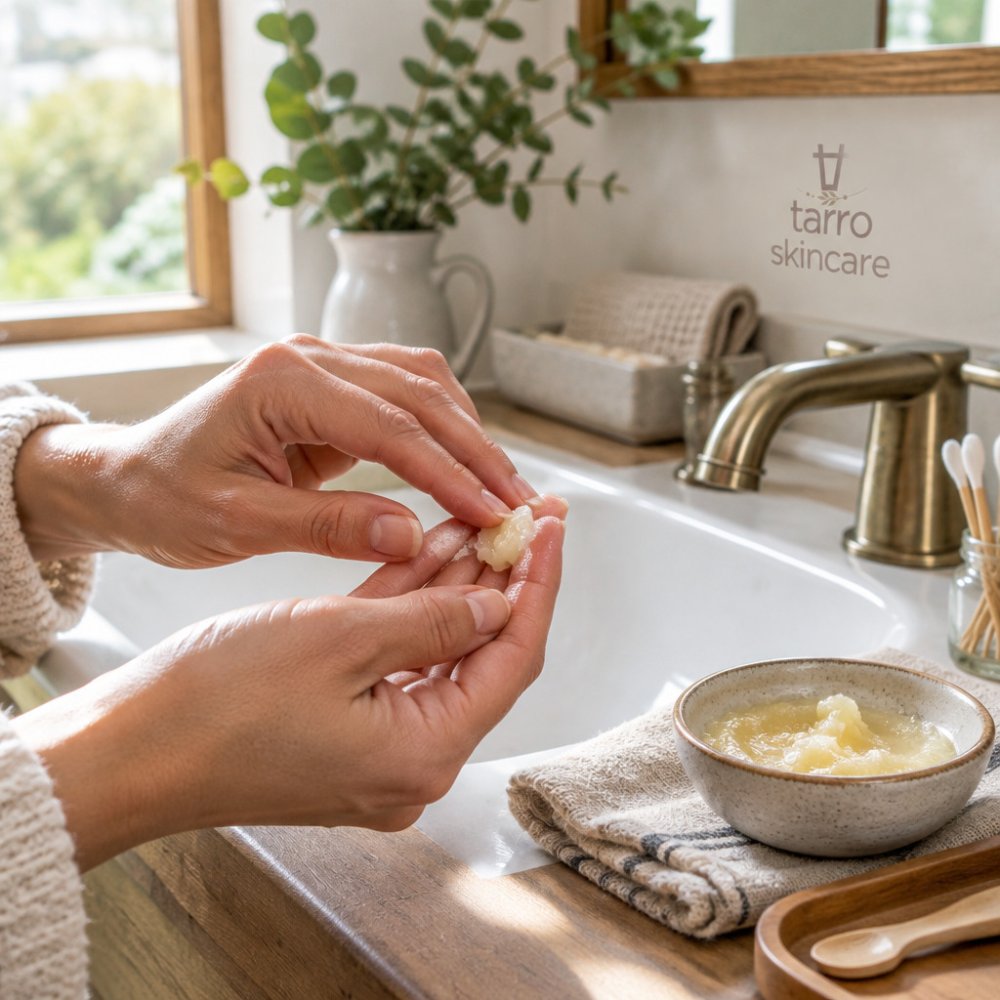
A balm works best on dry skin. Apply it to a dry face, massage for about 30 seconds, then emulsify with a little water before rinsing. This lifts residue cleanly without leaving a film.
Step-by-Step Technique for a Compromised Barrier
- Start with dry hands and a dry face. Water dilutes the balm and makes it harder to lift makeup.
- Scoop a pea-sized amount. Warm it between your fingertips until it turns liquid.
- Massage gently for 20 to 30 seconds. Use light circular motions and avoid the eye area's thinnest skin unless you are removing eye makeup.
- Add a few drops of lukewarm water. The balm will turn milky. This is the emulsifying step.
- Rinse thoroughly and pat dry.
Patch Testing a New Balm on Reactive Skin
Patch test any new cleanser before using it across your whole face. Apply a small amount to the inner forearm or behind the ear each evening for three to five days. Watch for stinging, itching, or redness that lasts beyond a few minutes.
If the area stays calm, introduce the balm to your face on alternate nights for the first week. Stop if irritation appears.
Cleansing Balm Ingredients to Avoid for Sensitive Skin
Read the full ingredient list rather than relying on front-of-pack claims. A balm can be labelled gentle and still contain something your skin will not tolerate, so the INCI list is the only reliable guide. The table below separates ingredients that commonly cause trouble from those that usually help, but treat it as a starting point rather than a verdict: individual tolerance varies, and a ingredient that suits one reactive complexion can sting another.
| Commonly problematic | Why it can irritate | Usually better tolerated | What it does |
|---|---|---|---|
| Added fragrance (parfum) | A frequent trigger for contact sensitivity; the word hides dozens of individual compounds | Fragrance-free formulas | Removes the most common cosmetic allergen |
| Essential oils (lavender, citrus, peppermint, eucalyptus) | Contain natural fragrance compounds such as limonene and linalool that oxidise and become more sensitising over time | Balms with no essential oils | Avoids plant-derived fragrance entirely |
| High levels of alcohol (alcohol denat., ethanol) | Can sting compromised skin and speed water loss | Alcohol-free formulas | Removes the drying and stinging risk |
| Strong surfactants (SLS, some sulfates) | Strip lipids and leave skin tight | Non-ionic or mild emulsifiers | Cleans without disrupting the lipid layer |
| Physical exfoliants (walnut shell, sugar) | Friction on an already reactive barrier | Smooth, grit-free balms | Removes makeup without abrasion |
| Preservatives such as methylisothiazolinone | A recognised contact allergen in leave-on and rinse-off products | Short, well-preserved formulas | Reduces allergen exposure |
On the helpful side, look for occlusive and soothing ingredients that support the barrier while the balm does its work. Shea butter, squalane, jojoba and other plant oils dissolve makeup and leave a protective film; colloidal oatmeal and centella asiatica (cica) are included for their soothing reputation; tocopherol (vitamin E) is an antioxidant that also helps protect the oils in the formula. None of these treats a damaged barrier, but they make the cleansing step less likely to set you back.
Simple ingredient lists are easier to judge. Tarro's Calm Balm, for example, lists just three ingredients: Adeps Bovis (tallow), Argania Spinosa (argan) Kernel Oil and Tocopherol. It is fragrance-free, so you can see exactly what you are applying. Look for a similarly short list when you shop, and check the position of any fragrance or essential oil: near the top means more of it, near the end means less.

Watch out: a "fragrance-free" claim does not guarantee a product is free of essential oils, because some brands use plant oils for scent while still calling the formula fragrance-free. Read the INCI list, not the badge.
Cleansing Balm Versus Oil, Milk and Micellar Water
Each cleanser type suits a different level of sensitivity and makeup load. Oil cleansers and balms both dissolve makeup well, but balms usually contain more solid fats and waxes, so they feel richer. Milk cleansers are lighter and suit very dry, reactive skin. Micellar water is the quickest option but often needs a second rinse step to remove residue.
For a barrier that is already compromised, a balm or milk is usually gentler than a foaming gel. The best choice depends on how much makeup you wear and how your skin responds.
Bare Skin Balm | Fragrance-Free Grass-Fed Tallow Balm for Face and Body →
Double Cleansing Sensitive Skin: When It Helps and When It Harms
Double cleansing means using an oil or balm first, then a water-based cleanser. It helps when you wear heavy makeup, water-resistant sunscreen or long-wear base, because the balm dissolves the oil-based layer and the second cleanse removes what is left. For sensitive skin, it can cause problems if you cleanse twice every night, because the total amount of cleansing adds up and the second step often introduces the surfactants the first step was meant to avoid.
A useful rule is to match the cleanse to the day. On days with heavy makeup or high-factor sunscreen, use the balm first and a gentle water-based cleanser second. On days with little or no makeup, one balm cleanse is usually enough. If your skin is already reactive, start with the balm alone and add the second step only if you can still feel residue.
How do you know whether a cleanser is disrupting your barrier? Look for signs that appear within minutes of washing and persist:
- Tightness that lasts more than a few minutes after patting dry.
- Stinging or smarting when you apply your usual moisturiser.
- Redness or blotchiness that was not there before cleansing.
- Persistent dryness or flaking despite moisturiser.
- Increased sensitivity to products that previously felt comfortable.
If two or more of these appear after a new cleanser, stop using it and return to whatever your skin tolerated before. A common pattern is that the cleanser is not the only culprit: over-cleansing, hot water and a second foaming step compound the effect.
Watch out: if tightness, stinging or redness continues after you have stopped the new product, or if skin cracks, weeps or becomes painful, stop experimenting and seek advice from a pharmacist or a doctor rather than layering more products on top.
Building a Skin Barrier Repair Routine
Cleansing is only one step. A barrier repair routine works best when the cleanser is gentle, the moisturiser is rich, and sun protection is used daily. Once your skin feels calm, look for a mineral sunscreen designed for dry sensitive skin and use it every morning.
Support the barrier with a moisturiser that contains lipids, and avoid stacking strong actives while your skin is reactive. Give any change at least two weeks before judging the result.
For the evening, apply Bare Skin Balm as the final step. Its formula is fragrance-free and water-free. It is available for £10.00 in 30g. Calm Balm is another option at £10.00, and it is available in 30g and 80g tins.

Choosing Your Tarro Balm for a Calmer Routine
If you are new to balms, start with a small size so you can patch test and judge how your skin responds. Bare Skin Balm suits dry skin after time outdoors, and Calm Balm is a good match for dry or tight skin that prefers no added fragrance.
Both are made with grass-fed British tallow and are simple to use: warm a small amount, press it into clean skin, and use it sparingly. Use within 12 months of opening.
Last Updated: November 4, 2026
Frequently Asked Questions
Is cleansing balm good for sensitive skin?
It can be, provided the formula is simple and fragrance-free and you use it gently. Balms melt into the skin and lift makeup and sunscreen without much rubbing, which reduces friction on reactive skin. Look for a short ingredient list and patch test first, as individual reactions vary. Tarro's Bare Skin Balm is fragrance-free and water-free, with a short ingredient list of tallow, jojoba, olive oil, squalane, beeswax and vitamin E, making it easy to check what you are applying.
Can cleansing balm damage your skin barrier?
Any cleanser can disrupt the barrier if it is harsh, heavily fragranced or used too often, and over-cleansing is a common cause of tightness and stinging. A well-formulated balm is generally gentler than foaming cleansers because it does not rely on strong surfactants. Signs your barrier is irritated include stinging, redness and tightness after cleansing. If these persist, stop the product and speak to a pharmacist or GP.
What ingredients should I avoid in a cleansing balm for sensitive skin?
Avoid added fragrance and essential oils if your skin reacts easily, since these are a frequent source of irritation. Be cautious with heavy occlusives used in large amounts on acne-prone areas, and check for alcohol or strong exfoliating acids if your skin is currently compromised. Simple formulas with a limited number of ingredients make it easier to identify a trigger. Tarro's Bare Skin Balm contains no added fragrance and uses only the listed ingredients.
Should you double cleanse if you have sensitive skin?
Double cleansing is useful after heavy makeup, sunscreen or long days outdoors, but it is not needed every day for most sensitive skin. Using a balm first and then a gentle water-based cleanser can be effective, while cleansing twice with strong products is not. If your skin feels tight or stings, cut back to one gentle cleanse and focus on hydration.


