

How to Layer Face Balm Over Vitamin C Serum
Last Updated: November 18, 2026
Quick Summary
To layer face balm over vitamin C serum, apply the serum to cleansed skin first, wait until it feels dry to the touch, then press a thin layer of warmed balm over the face and neck. Finish with sunscreen in the morning.
- Apply serum after cleansing and before any rich product, since thinnest goes on first.
- Wait until the serum no longer feels wet when you press a fingertip to your cheek.
- Warm the balm between clean fingertips before pressing it on in a thin layer.
- Use a pea-sized amount of balm for most faces, and add more only to dry patches.
- Applying balm over wet serum is the most common cause of pilling.
Table of Contents
- Why Vitamin C Serum and Face Balm Work Together
- What Order to Apply Vitamin C Serum and Moisturiser
- How Long to Wait Between Skincare Layers
- How to Apply Face Balm Over Vitamin C Serum
- Vitamin C Serum for Sensitive Skin: Layering Safely
- Fixing Pilling, Tackiness or a Greasy Finish
- Building Your Routine Around Your Balm
- Frequently Asked Questions
Why Vitamin C Serum and Face Balm Work Together
Vitamin C serum and face balm do different jobs, and that is exactly why they pair well. At Tarro, we think of the serum as the active step and the balm as the seal. Vitamin C is widely studied for skin health, and a review of vitamin C's roles in skin health notes that topical application can deliver some vitamin C to the epidermis.
Serums are usually thin and water-based. They sink in fast, which is good for delivery but can leave skin feeling dry by the next hour. A layer of balm on top helps hold moisture in place. That is the main reason to learn how to layer face balm with vitamin C serum properly rather than using either one alone.
The catch is that order and timing matter.
What Order to Apply Vitamin C Serum and Moisturiser
The general rule is simple: apply products from thinnest to thickest. Vitamin C serum goes on after cleansing and before anything rich. A moisturiser or balm comes next, and sunscreen finishes a morning routine.
Here is a simple sequence to start with:
- Cleanse your face and pat it dry
- Apply vitamin C serum to clean, slightly damp or dry skin
- Wait until the serum feels dry to the touch
- Apply your face balm or moisturiser
- Finish with sunscreen in the morning
How Long to Wait Between Skincare Layers
Waiting matters more with vitamin C than with most products. A serum that is still wet will mix with your next layer, which can cause pilling or a tacky feel.
The practical test is touch. Once the serum no longer feels wet when you press a fingertip to your cheek, it is ready. For most people this takes about one to two minutes. Thicker serums may need a little longer.
Do not wait so long that you forget. Keep your routine moving. The aim is to let the serum settle, not to leave it sitting for ten minutes between steps.
How to Apply Face Balm Over Vitamin C Serum
A face balm is usually richer and more occlusive than a lotion or cream. That is the point of it, but it also means the application step needs more care than most guides suggest. The aim is a thin, even seal over settled serum, not a thick mask.
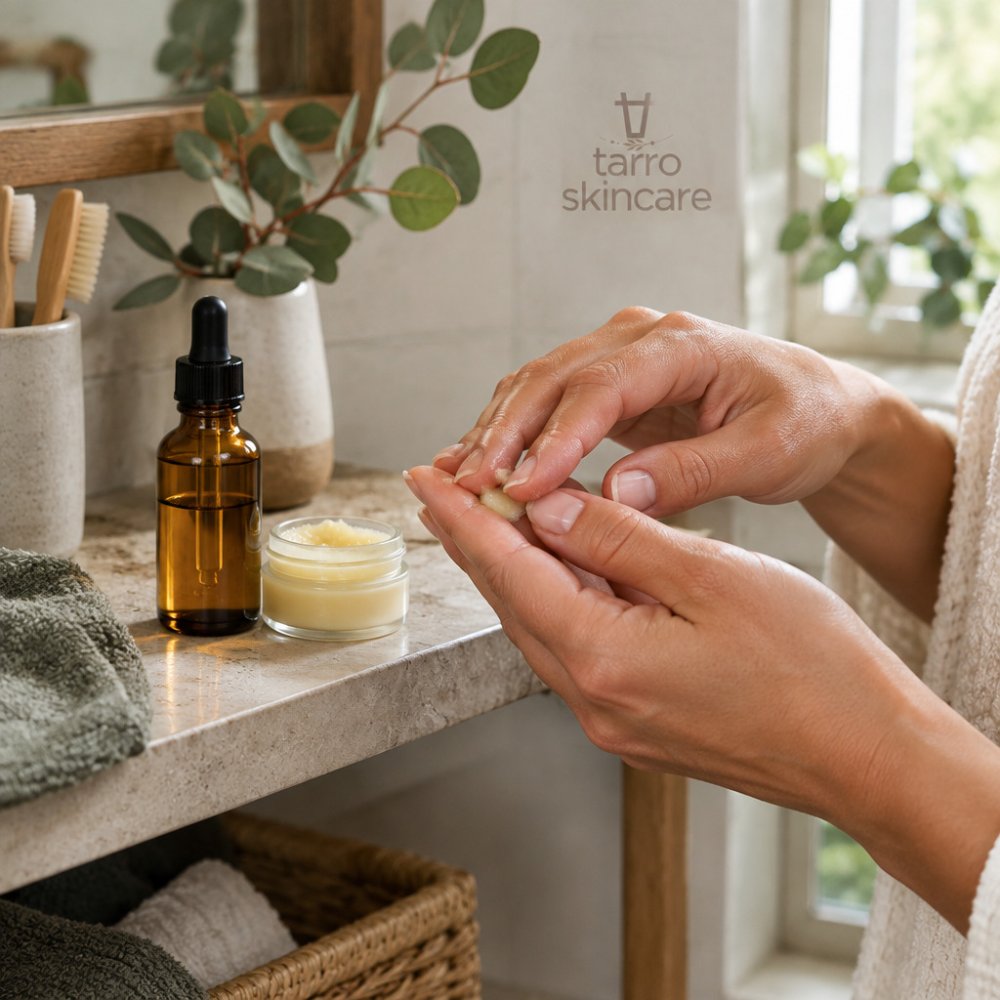
Work through these steps in order:
- Cleanse and pat dry, leaving skin very slightly damp rather than dripping
- Apply your vitamin C serum in a thin layer across the face and neck
- Let the serum settle until it feels dry to the touch, not wet or tacky
- Warm a small amount of balm between clean fingertips until it softens
- Press and smooth it over the face and neck in a thin layer, starting with the driest areas
Warming the balm first matters because most balms are firm in the jar. A balm that is cold or stiff will drag on the skin and go on unevenly, which is one of the common causes of a patchy finish.
Use light pressure rather than rubbing. Pressing the balm in helps it spread without disturbing the serum underneath, and it avoids the redness that comes from over-rubbing. Move from the centre of the face outwards, and take the layer down the neck as well, since the neck is often drier than the cheeks.
Watch out: applying balm while the serum is still wet is the single most common cause of pilling, because the two layers mix instead of sitting one over the other. If you can feel slip or see the serum move under your fingers, wait another minute.
How Much Balm to Use
A pea-sized amount is enough for most faces. For more practical guidance on quantity, see how much balm to apply to your face. If your skin feels tight after it settles, add a second small dab to the dry patches rather than starting again with a larger scoop.
Too much balm is worse than too little. An overloaded layer sits on the surface, feels greasy, and can make sunscreen and makeup slide. If you finish and find residue on your fingertips, you used more than you needed. A useful check is to press a clean finger to your cheek: it should feel soft and slightly tacky, not slick.
Where Sunscreen and Makeup Fit
In the morning, sunscreen remains the final skincare step, applied over the balm. Use enough to cover the face and neck evenly, and do not treat balm as a substitute for sun protection.
If you wear makeup, give the balm and sunscreen a few minutes to settle before applying foundation. A short wait reduces patchiness and stops the base from gathering in the areas where balm is thickest. If your foundation starts to separate by midday, the usual fix is less balm rather than a different foundation.
The steps for applying balm over serum come down to a few key points, summarised below.
| Step | What to do | Timing or amount |
|---|---|---|
| Cleanse | Pat skin dry, leaving it very slightly damp | Not dripping |
| Apply serum | Thin layer across face and neck | Before balm |
| Let serum settle | Wait until it feels dry to the touch | Not wet or tacky |
| Warm balm | Soften between clean fingertips | Before applying |
| Apply balm | Press and smooth in a thin layer | Pea-sized for most faces |
Vitamin C Serum for Sensitive Skin: Layering Safely
Patch test any new product on your jaw or inner arm for a day or two. A balm with a short, simple ingredient list makes it easier to spot what might be causing a reaction.
If redness, burning or stinging continues, stop using the serum and speak to a pharmacist or your GP.
Fixing Pilling, Tackiness or a Greasy Finish
Most layering problems come down to four causes: wet serum, too much product, incompatible textures, or a serum that has not been given time to settle. Working out which one you have is quicker than changing your whole routine.
- Pilling (small rolls of product on the skin): the serum was still wet when the balm went on, or you used too much of either layer. Let the serum dry to the touch and use less balm.
- Tacky feel: usually too much balm, or a balm applied over serum that has not fully settled. Reduce the amount and give each layer an extra minute.
- Greasy finish: an overloaded balm layer, or a balm applied to skin that is still damp from cleansing. Pat the skin dry first and use a thinner layer.
- Stinging or flushing when the balm goes on: the serum may be too strong for your skin, or the balm may be trapping it against the surface. Stop, rinse with cool water, and reintroduce the serum more slowly.
Texture compatibility matters more than most guides admit. A water-based vitamin C serum under a rich, oil-based balm is generally the easiest pairing, because the water layer settles and the oil layer seals over it. Problems tend to appear when a serum is itself thick or silicone-heavy, or when a balm is applied before the serum has had time to dry. If you keep getting pilling with one serum and not another, the serum's texture is the likely culprit rather than your technique.
If irritation, redness or burning continues after you stop the serum, speak to a pharmacist or your GP rather than pushing through.
A practical reset if layering keeps failing: use less of both products, wait longer between steps, and apply the balm only to the areas that actually feel dry. Most people find that solves the problem without changing products at all.
Building Your Routine Around Your Balm
A balm works best when it fits your routine rather than making it harder. Keep your steps few and simple. A typical morning might be cleanser, serum, balm and sunscreen. An evening routine can drop the serum and add a richer balm for overnight comfort. To see how the balm sinks in before you decide where it fits, read whether tallow balm absorbs into skin.
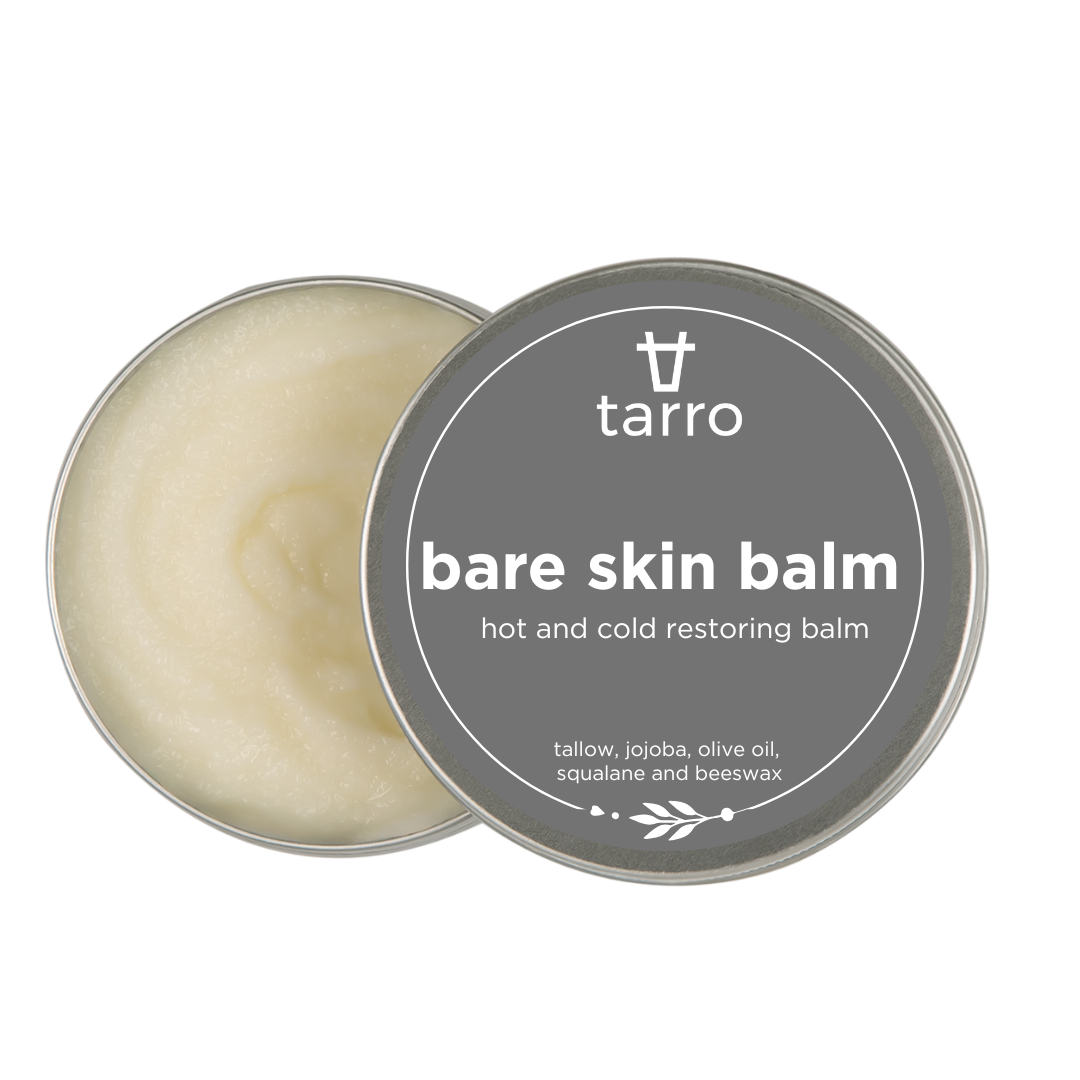
Our Bare Skin Balm is fragrance-free and suits face and body. You can find the Bare Skin Balm here at £10.00.
If you are wondering whether a body product works on the face, our guide on whether you can use body balm on your face covers that in more detail.
Frequently Asked Questions
Should vitamin C serum go before or after face balm?
Apply vitamin C serum first, after cleansing and while skin is still slightly damp, then follow with face balm. Serums are usually lighter and water-based, so they need to reach the skin before a richer, occlusive layer seals them in. Putting the balm on first can form a barrier that stops the serum absorbing properly. If your serum is thick or oil-based, check the product directions, as some formulas are designed to go on after moisturiser.
How long should I wait between vitamin C serum and face balm?
Wait until the serum feels dry to the touch before applying face balm, which usually takes one to two minutes for a standard serum. Applying balm to a wet serum layer can cause pilling or make the finish feel tacky. Thicker or more concentrated serums may take a little longer. Pressing a fingertip gently on your cheek is a simple test: if it feels dry and nothing lifts or smears, you can continue.
Can I use vitamin C serum and face balm in the same routine every day?
Yes, many people use vitamin C serum in the morning and a balm after it every day. Start with a patch test on the jawline or inner arm for a few days, particularly if your skin is sensitive. If you notice stinging, redness or itchiness, reduce how often you use the serum or pause it. Use the balm sparingly, as a pea-sized amount is usually enough for the face. Sunscreen should always be the final step in the morning.
How much face balm should I apply after vitamin C serum?
A pea-sized amount is enough for most faces. Warm it between your fingertips until it melts, then press and smooth it over your face, neck and any dry areas. Because the balm is rich and water-free, a small amount forms a comfortable protective layer without a greasy feel. If you find it sits on the surface, use less next time. You can always add a little more to dry patches, but it is easier to build up than to remove excess.


