

How Much Balm to Apply to Face: A Practical Guide
Last Updated: November 14, 2026
Quick Summary
For most faces, a pea-sized amount of balm is the right starting point for how much balm to apply to face. Warm it between your fingertips and press it into clean, slightly damp skin, then add one small dab only where skin still feels tight. Clinical guidance suggests about 1.0 FTU, roughly a quarter teaspoon, to cover the whole face.
- Start with a pea-sized amount for most faces.
- Clinical benchmark is 1.0 FTU, about 1.2 grams or a quarter teaspoon.
- Warm the balm between your fingertips so it melts into a thin film.
- Press it in rather than rubbing, working from the centre outwards.
- If skin feels slick or balm rubs onto your pillow, you have used too much.
Table of Contents
- How Much Balm to Apply to Your Face to Start
- Pea-Sized Amount: Your Starting Point for Most Faces
- Adjusting the Amount by Balm Type and Skin Type
- Tallow Balm Application Tips for Clean and Damp Skin
- How Often to Use Tallow Balm in Your Routine
- Signs You Have Applied Too Much Balm
- Start Your Routine With the Right Amount of Glow Skin Balm
- Frequently Asked Questions
How Much Balm to Apply to Your Face to Start
The skincare industry is expected to grow from approximately £128 billion in 2025 to more than £175 billion by 2030, so more products are competing for space on your shelf than ever before. Skincare industry growth projections, Tricoci University
Tarro makes face and body balms from grass-fed British tallow. A heavy scoop is a common mistake when a small amount would do. A good starting point is a small amount that covers the whole face in a thin, even layer. Our fragrance-free tallow balm suits this approach if you want a scent-free option. Too much and the balm sits on top, feels greasy and rubs off on your pillow.
This guide explains how much to use, how to adjust for your skin, and how to tell when you have applied too much.
Pea-Sized Amount: Your Starting Point for Most Faces
For most faces, a pea-sized amount is a sensible answer to how much balm to apply to face. Warm it between your fingertips first so it spreads easily. Then press it into your skin in small, gentle strokes.
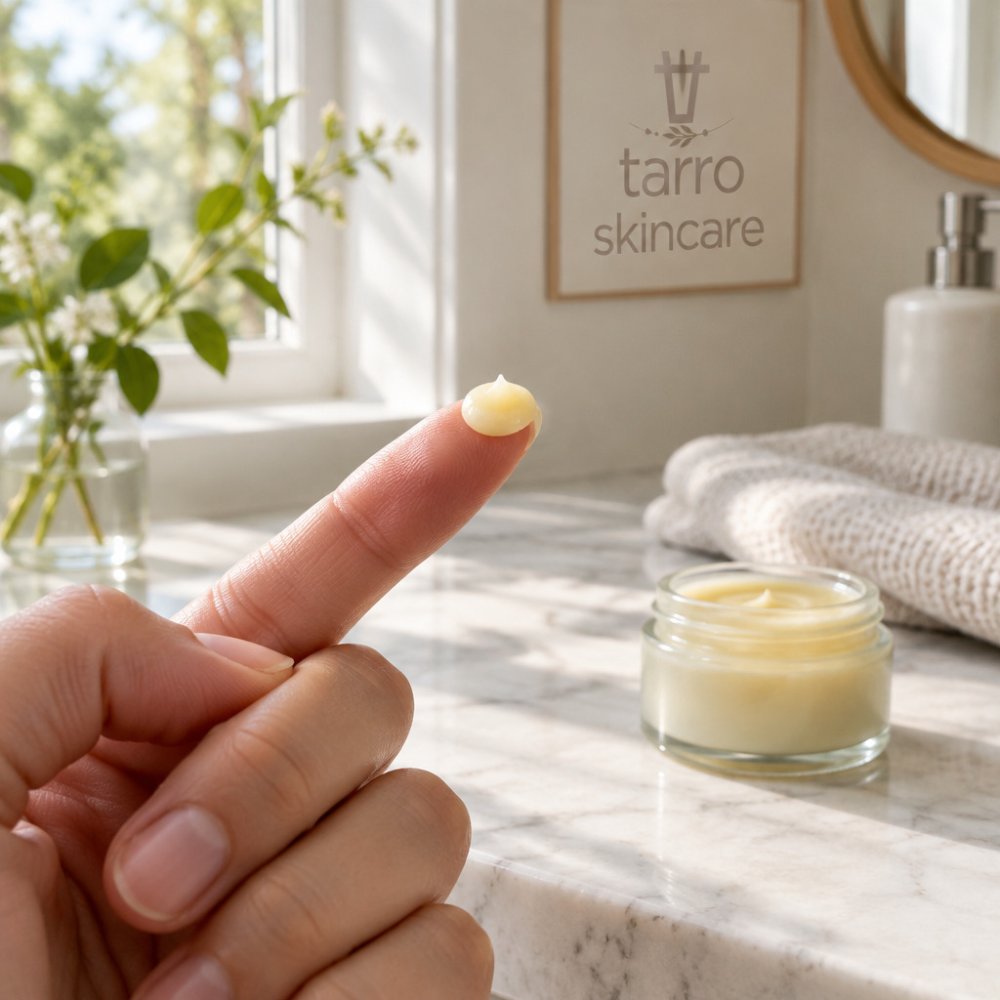
Clinical dosing guidance gives a more precise benchmark. Leslie Baumann, MD, notes that 1.0 FTU (Finger Tip Unit), roughly 1.2 grams or a quarter teaspoon, is the recommended amount to cover the entire face for skin creams. Facial product application dosage guidance, Leslie Baumann MD
Start with the smaller amount. You can always add a little more if your skin still feels dry.
Quick check: If your skin feels tight after 30 seconds, add one more small dab. If it feels slick, you have used too much.
The article gives these starting amounts and checks for how much balm to use on the face.
| Guidance | Amount or check | Source in article |
|---|---|---|
| Typical starting amount | Pea-sized | General guidance |
| Clinical benchmark | 1.0 FTU, about 1.2 g | Leslie Baumann, MD |
| Quarter teaspoon equivalent | About 1.2 g | Leslie Baumann, MD |
| Tight after 30 seconds | Add one more small dab | Quick check |
| Slick feeling | Too much applied | Quick check |
Adjusting the Amount by Balm Type and Skin Type
A pea-sized amount is a starting point, not a fixed rule. The right amount depends on what kind of balm you are using, how dry your skin is, and whether you are covering the neck as well as the face. Use the guidance below to adjust up or down without over-applying.
By balm type and texture
- Solid, dense balms (such as a tallow balm in its solid form): start with a pea-sized amount. Warm it well between your fingertips so it melts into a thin film. If it still drags, add a tiny amount rather than scooping more.
- Whipped or aerated balms (such as a lighter overnight cream-balm): these spread further, so use roughly half a pea-sized amount for the face and add more only on dry patches.
- **
- Makeup or tinted balms: use a very small amount, less than a pea, and build in thin layers.
- **
By skin type
- Dry or mature skin: start with a pea-sized amount and add one extra small dab for the cheeks and any flaky areas. If your skin still feels tight after 10 minutes, add another small dab rather than a full second pea.
- Oily or combination skin: use less than a pea-sized amount overall and focus on the dry patches. Apply a thinner layer to the T-zone and a slightly fuller layer to the cheeks.
- **
- Normal skin: a pea-sized amount is usually right for the whole face. Adjust by feel rather than by habit.
By face size and neck coverage
A smaller face needs less; a larger face or one that includes the neck needs more. If you are applying balm to the neck as well, add roughly half a pea-sized amount for the neck and décolletage. Apply the face amount first, then use what remains on your palms for the neck so you do not double up.
If you are unsure, apply less than you think you need, wait a minute, and add more only where the skin still feels tight.
Tallow Balm Application Tips for Clean and Damp Skin
Wash your face, pat it gently, and apply while your skin still has a little moisture. This helps the balm spread and sink in rather than sitting on the surface.
Clean skin gives you the most even coverage. Slightly damp skin helps the balm glide and absorb more quickly.
Warming the Balm Between Your Fingertips
Take your pea-sized amount and rub your fingertips together for a few seconds. The warmth softens the tallow so it melts into a smooth film.
Pressing Rather Than Rubbing
Press the balm into your skin with your palms or fingertips. Read a deeper look at how the balm absorbs after you apply it. Rubbing creates friction and can leave uneven patches. Work from the centre of your face outwards, and finish with the neck if you wish.
How Often to Use Tallow Balm in Your Routine
Most people use a face balm once or twice a day, usually after cleansing and any serum.
If your skin still feels dry in the afternoon, a small top-up is fine. Check how your skin feels over a week before deciding on a set routine. For more guidance, read how to fix dry, tight facial skin.
Signs You Have Applied Too Much Balm
Watch for these signs of using too much balm:
- A greasy or slick feeling that lasts for hours
- Balm rubbing off onto pillows, hats or clothing
- Small bumps or congestion along the jawline or forehead
- Makeup sliding or pilling after you apply it
- A tight, coated feeling rather than soft, comfortable skin
What to do when the balm feels greasy
If your skin feels slick after 10 to 15 minutes, you have probably applied more than your skin can absorb. Do not wash your face again, which can strip it. Instead, blot gently with a clean tissue or press a clean flannel against the skin to lift the excess. Next time, use half the amount and warm it more thoroughly before pressing it in. A greasy feel can also mean the balm is sitting on top of another product, so check the order of your routine.
What to do when the balm pills or rolls
Pilling happens when a balm is applied over a serum, moisturiser, or sunscreen that has not fully dried, or when you rub rather than press. If you see small rolls of product, stop rubbing. Press the balm in with your palms instead. Wait 60 seconds between layers so each product can settle. If pilling continues, use less balm and apply it only to the driest areas.
What to do when makeup separates
A balm that is too heavy under makeup can cause foundation to slide or separate. If this happens, use a much smaller amount, wait five minutes, and blot before applying makeup. For daytime, consider a lighter balm or apply the richer balm only at night. If you need both, apply the balm first, let it absorb, then use a thin layer of primer before foundation.
How to remove excess without starting over
Wipe off the excess with a tissue, then press a clean, damp flannel over the area. Do not scrub. If the skin still feels coated, use a small amount of micellar water on a cotton pad to lift the surplus, then pat dry. Use less balm next time and build up in thin layers.
Watch out: if you regularly need to blot or remove excess, your starting amount is too large. Reduce it by half and add a small dab only where skin still feels dry.
Start Your Routine With the Right Amount of Glow Skin Balm
Glow Skin Balm is formulated for dry, dull, or tired-feeling skin. It combines grass-fed British tallow with olive oil and a sweet orange scent. Start with a pea-sized amount, warm it between your fingertips, and press it into clean skin. Available in 30g and 80g aluminium tins from £10.00.
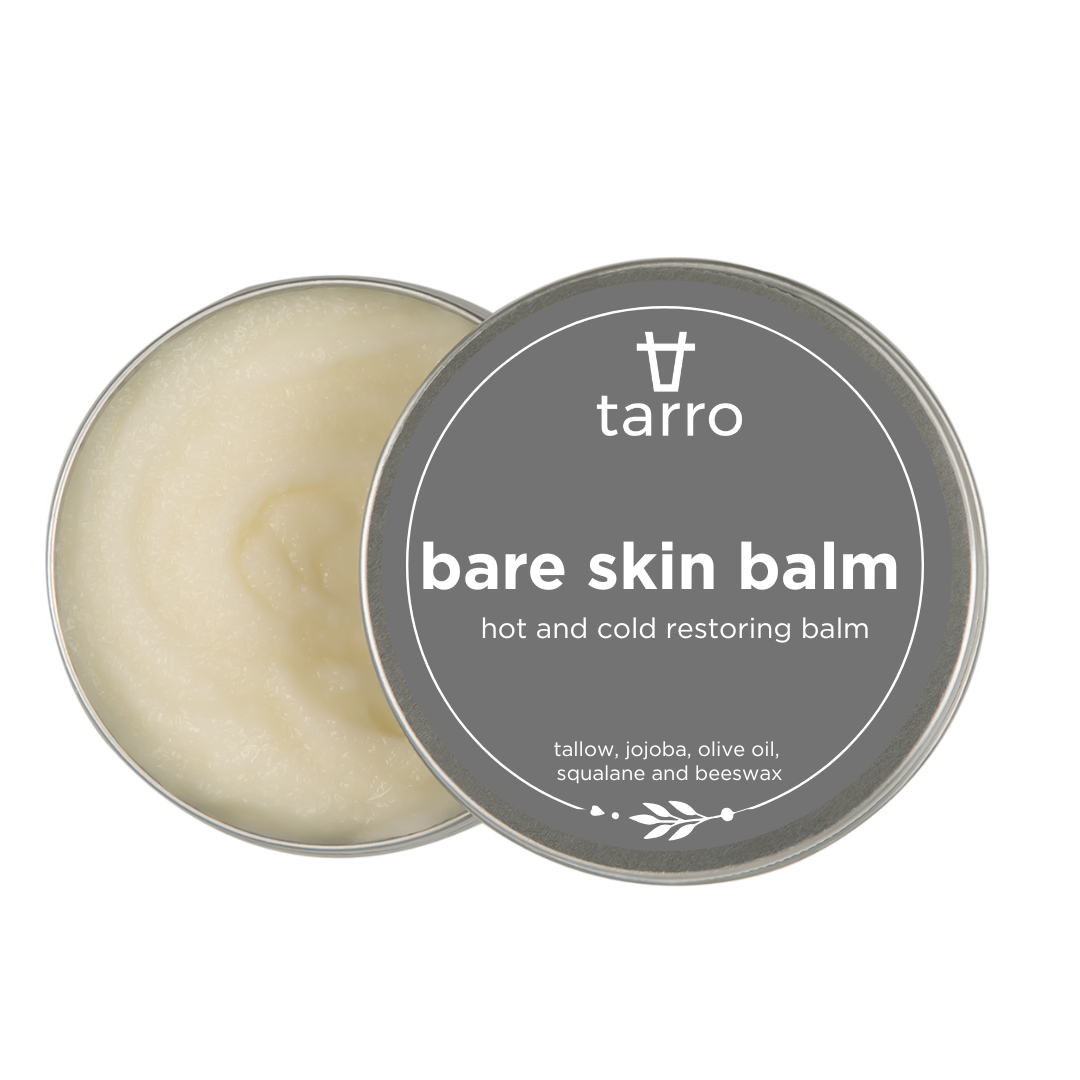
Tarro also makes Bare Skin Balm, a fragrance-free option for skin that feels dry after time outdoors, and Cloud Cream, a whipped evening balm.
Frequently Asked Questions
How do I know if I've applied too much face balm?
Common signs include a greasy or slick film that lingers for more than a few minutes, a heavy feeling that makes makeup slide or pill, and skin that looks shiny rather than soft. If you can still feel the balm on your skin an hour after application, you have probably used more than your face needs. Start with a pea-sized amount next time, spread it thinly, and press it in. Adding more only if your skin still feels tight or dry is a safer approach than layering a large amount at once.
Should face balm be applied to damp or dry skin?
Skin that is completely dry can make the balm feel thicker and harder to spread. Apply the balm after cleansing and after any water-based serum, while skin still feels a little dewy. The amount you need stays much the same either way, so begin with a pea-sized portion.
How often should I use tallow balm on my face?
Glow Skin Balm is suitable for daily use, and Cloud Cream is designed as an overnight balm. Watch how your skin responds over the first week or two. If it feels comfortable and not greasy, your routine is working. If you notice shine or heaviness, reduce how often you apply it or cut back on the amount.
Does tallow balm absorb quickly into the skin?
A small amount of tallow balm warmed between the fingertips usually sinks in within a few minutes, leaving skin soft rather than sitting on the surface. Bare Skin Balm combines tallow with jojoba, olive oil and squalane to create a layer that is rich but spreadable.


