

How to Use Tallow Lip Balm for Mature Lips
Quick Summary
Tallow lip balm softens dryness and helps mature lips keep the moisture they already have. Press a warmed, thin layer along the lip lines and the edge of the lip, then reapply through the day and add a thicker layer overnight. It is a moisturiser, not an anti-ageing treatment.
- Tallow balm softens dryness but cannot erase lip lines or plump lips.
- Choose an unscented balm with few ingredients for sensitive or mature lips.
- Press balm along lip lines rather than dragging it across thin skin.
- Seal the vermilion border, where moisture escapes first.
- Use a separate broad-spectrum lip sunscreen, since most tallow balms contain no SPF.
Table of Contents
- Why Mature Lips Need Extra Moisture
- What Tallow Lip Balm Can and Cannot Do for Mature Lips
- Tallow Lip Balm for Dry Lips: Who Benefits Most
- Beef Tallow Lip Balm Ingredients to Look For
- Tallow vs Beeswax Lip Balm: Choosing the Right Base
- Step-by-Step: How to Apply Tallow Lip Balm for Lip Lines
- Start Your Mature-Lip Routine With Tarro's Unscented Lip Balm
- Frequently Asked Questions
Why Mature Lips Need Extra Moisture
Lips lose moisture faster as we age. The skin there is thinner than almost anywhere else on the body, and it has fewer oil glands to help it hold water. Over time, fine lines appear and the surface can look dry or crêpey.
Many people in their thirties, forties and beyond notice that their usual lip balm no longer does enough. A few things tend to make the problem worse:
- Less natural oil production in the skin
- Thinner lip tissue that shows dryness more clearly
- Habits such as licking the lips or breathing through the mouth
- Cold weather, central heating and sun exposure
A good lip balm for mature lips should do three things: add moisture, hold that moisture in, and feel comfortable to wear. Tallow balm can do all three, but it works best when you know what it is good at.
What Tallow Lip Balm Can and Cannot Do for Mature Lips
A tallow balm forms a light, protective layer that helps lips keep the moisture they already have.
It is important to be realistic. Tallow is a moisturising base. It is not an anti-ageing treatment.
Here is a simple way to think about it:
- Tallow can: soften dryness and make lips feel more comfortable
- Tallow cannot: erase lip lines, plump lips, or replace a medical treatment
Tallow Lip Balm for Dry Lips: Who Benefits Most
Tallow balm suits some people better than others. People who may find it useful include:
- People with dry, tight or flaky lips who want a simple, rich balm
- Anyone who prefers products with few ingredients
- Those who find many commercial balms too fragranced or heavy
It may be less suitable for people who prefer a glossy finish or a very light texture. If you have a known reaction to animal-derived products, check the ingredient list before you start.
Beef Tallow Lip Balm Ingredients to Look For
A tallow balm is only as good as the rest of the formula. For mature lips, the base matters less than what is added around it, because added fragrance, essential oils and flavourings are the most common triggers for irritation on thin, reactive lip tissue.
Read the label in this order:
- Tallow (Adeps Bovis) or beef tallow. This is the moisturising base of the balm. Tarro's tallow is sourced from grass-fed cattle.
- A carrier oil. Sweet almond oil, castor oil, coconut oil and olive oil are common. Each changes the feel: castor oil adds gloss and slip, coconut oil is lighter, sweet almond oil is a middle ground. If you have a nut allergy, check for almond and other nut oils specifically.
- Beeswax (Cera Alba). This firms the balm and adds a surface protective layer.
- Vitamin E (Tocopherol). Usually added to slow oxidation of the oils. It is not a treatment for lip lines, despite what some marketing implies.
- Essential oils, fragrance and flavourings. Peppermint, citrus, cinnamon and 'flavour' are the usual culprits behind tingling, redness and peeling. For mature or reactive lips, unscented and unflavoured is the safest starting point.
Ingredient safety and sensitivities to know about:
- Fragrance and essential oils. Even 'natural' essential oils can irritate. Menthol, peppermint and cinnamon are common in flavoured balms and are among the most frequent causes of contact irritation on lips.
- Beeswax and propolis. Beeswax allergy is uncommon but real, and people who react to propolis (a bee-derived resin) may also react to beeswax. If you have reacted to bee products before, patch test first.
- Lanolin cross-sensitivity. Lanolin is not usually in tallow balms, but it is common in medicated and nipple balms that people use on lips. If you have reacted to lanolin in the past, check any balm you layer with tallow.
- Nut and seed oils. Almond, coconut and castor oils are generally well tolerated, but a known nut allergy means reading the full ingredient list rather than assuming.
- Patch testing. Apply a small amount to the outer edge of the lip or the skin just below it and wait 24 hours before using it fully. This is especially worth doing with any new flavoured or essential-oil-containing balm.
Watch Out
If your lips sting, swell, blister or develop a rash after a new balm, stop using it and speak to a pharmacist. Persistent cracking, bleeding or sores that do not settle within a couple of weeks should be checked by a GP, because some lip conditions need treatment rather than another balm.
Choosing between formulas:
- Unscented, minimal-ingredient balm. Best first choice for sensitive or mature lips, and the easiest to layer under lipstick.
- Flavoured or peppermint balm. Pleasant for some, but the tingling is irritation, not proof that it is working. Avoid if lips are cracked.
- Glossy or tinted balm. Castor oil and added colour give shine and a sheer wash of tint; useful if you want one product for moisture and colour, but check that the tint does not contain fragrance.
- Balm with SPF. Rare among tallow balms. If sun protection matters to you, plan for a separate broad-spectrum lip sunscreen rather than assuming a balm covers it.
Tallow vs Beeswax Lip Balm: Choosing the Right Base
Many people find that a blend works well. Our Unscented Lip Balm, for example, combines tallow, sweet almond oil and beeswax.
For a tinted option, Tallow Tint - Tinted Tallow Balm is built on a grass-fed tallow base with castor oil, fractionated coconut oil, beeswax and vitamin E, plus a sheer wash of colour.

Step-by-Step: How to Apply Tallow Lip Balm for Lip Lines
Mature lips respond to technique as much as to formula. Thinner tissue, fine lines and a weaker barrier mean the way you apply balm changes how well it holds. The routine below is built around those changes rather than around a generic 'apply as needed' instruction.
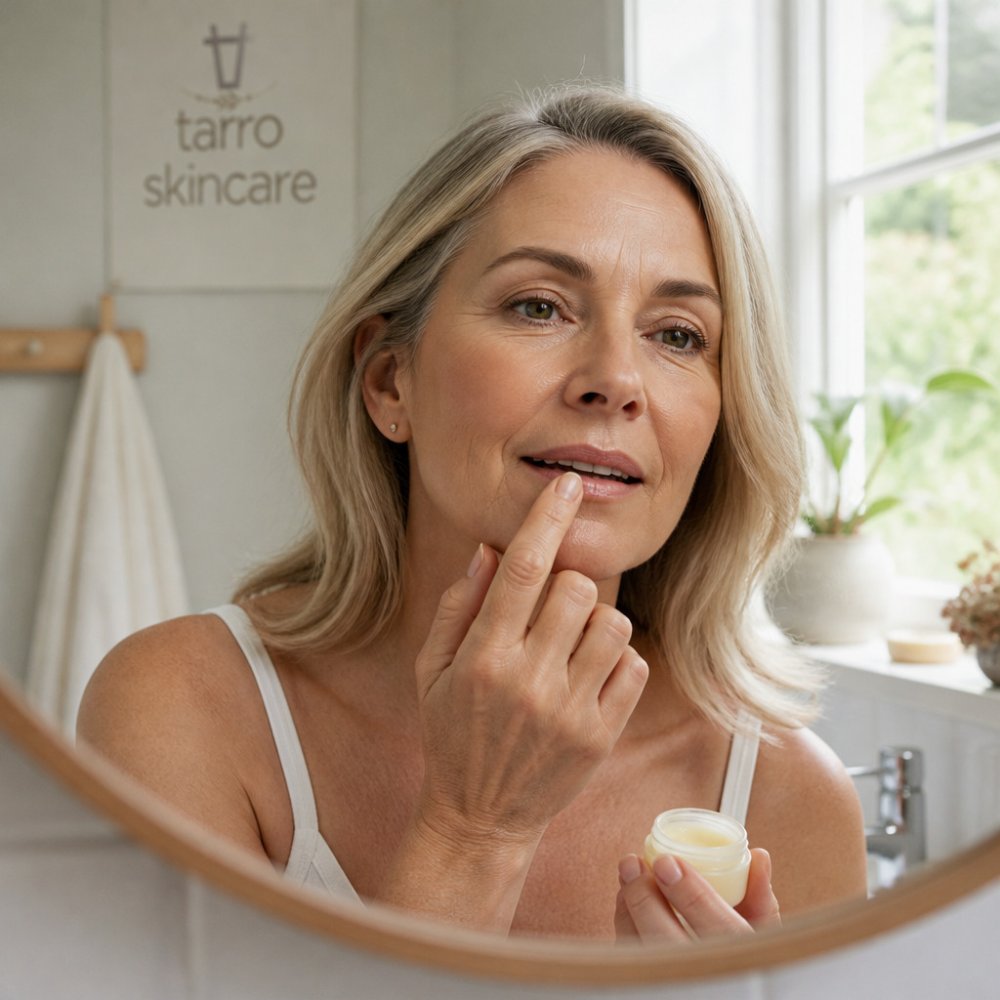
- Cleanse gently, then pat dry. Remove old balm or lipstick with a soft, damp cloth or a fragrance-free micellar water on a cotton pad. Avoid foaming cleansers and avoid rubbing. Leave lips slightly damp, balm spreads further and seals in that surface water.
- Exfoliate once a week at most. A soft, damp flannel used in small circles is enough for most people. Skip gritty scrubs and avoid exfoliating if lips are cracked or bleeding; broken skin needs barrier repair, not friction.
- Warm a pea-sized amount between fingertips. Tallow is firm when cool. Warming it first means you can press it on rather than drag it across fine lines.
- Press along the lip lines, not across them. Use a fingertip to pat the balm upwards and outwards from the centre of the lip towards the vermilion border. Pressing fills the shallow lines that make lips look crêpey; dragging pulls at thin tissue.
- Seal the vermilion border. The edge where lip meets skin is where moisture escapes first. A thin extra pass along that border, and slightly beyond it, reduces the feathering that makes lipstick settle into lines.
- Layer under lipstick, not over it. Wait 60 seconds for the balm to settle, blot once with a tissue, then apply lipstick. This keeps colour from sliding while still giving mature lips a hydrated base. If you use a lip SPF, apply the sunscreen first, let it dry, then add balm on top, or choose a balm routine that includes a separate broad-spectrum lip sunscreen, since most tallow balms contain no SPF.
- Reapply morning, midday and before bed. A common pattern is one application after brushing teeth, one after lunch, and a thicker layer at night. If you are in central heating, on a long flight or outdoors in cold wind, add one more.
- Use a slightly thicker layer overnight. At night there is no talking, drinking or lip-licking to remove the balm, so a thicker coat gives the barrier longer to work. A thin layer of balm under a humidifier in the bedroom is a simple combination many people find helpful in winter.
Pro Tip
If you wear lipstick daily, keep a separate balm for daytime layering and a thicker balm or ointment for overnight. Using one product for both usually means either your daytime balm is too heavy or your night layer is too thin.
Common mistakes to avoid:
- Applying too much at once. A thick coat feels greasy and can migrate into fine lines around the mouth. A thin, even layer absorbs better and looks neater under colour.
- Licking lips to 'spread' balm. Saliva evaporates and takes moisture with it, which worsens dryness over the day.
- Skipping the border. Balming only the centre of the lip leaves the most vulnerable edge unprotected.
- Exfoliating daily. Over-exfoliation thins an already thin surface and makes cracking more likely.
A note on SPF: Many tallow balms, including simple tallow-beeswax-oil blends, contain no sun protection. If you are outdoors for more than a short walk, or if you are using an active ingredient such as retinol on your face, a separate broad-spectrum lip sunscreen applied underneath the balm is the safer routine. Check the label for a stated SPF and reapply it as directed, balm alone is not a substitute.
The routine below is easier to follow at a glance, so here is each step with its timing.
| Step | What to do | Time or frequency |
|---|---|---|
| Cleanse | Remove old balm with a soft damp cloth | Before each routine |
| Exfoliate | Gentle damp flannel in small circles | Once a week at most |
| Warm balm | Warm a pea-sized amount between fingertips | Before applying |
| Apply | Press along lip lines, not across | Pat lightly, do not drag |
| Seal border | Thin extra pass on the vermilion border | Each application |
| Layer under lipstick | Wait 60 seconds, blot once, then apply colour | Before lipstick |
| Reapply | Morning, midday and before bed | Add more in heating or cold wind |
| Overnight | Thicker layer under a humidifier | Nightly |
Start Your Mature-Lip Routine With Tarro's Unscented Lip Balm
If you are new to tallow balm, start simple. The Unscented Lip Balm is a good first step. It is made with three ingredients, is unscented, and costs £5.00.

Keep your routine short at first. Use one balm, apply it consistently for two to three weeks, and notice how your lips feel. That is a more useful test than chasing dramatic results.
Frequently Asked Questions
Is tallow lip balm good for mature lips?
Tallow lip balm can help mature lips feel softer and more comfortable because tallow provides fatty acids that support the lip barrier, which helps lips hold on to moisture. Beeswax adds a protective layer. It will not reverse lip lines or thin lips, and it should be treated as a moisturiser rather than an anti-ageing treatment. Pairing it with daily sun protection is a sensible habit for lips at any age.
Is beef tallow safe to use on your lips?
If you have sensitive skin or a known reaction to animal-derived ingredients, do a patch test on a small area first and stop use if irritation develops. Check the full ingredient list before buying.
What ingredients should you look for in a tallow lip balm?
Look for a short ingredient list. Tarro's Unscented Lip Balm, for example, contains tallow (Adeps Bovis), sweet almond oil (Prunus Amygdalus Dulcis Oil) and beeswax (Cera Alba), with no added fragrance. Shorter formulas make it easier to spot anything you react to. Check whether the tallow is listed as grass-fed or sourced from a named supplier, and avoid products where fragrance or flavouring is listed if you want an unscented option.
How often should you apply tallow lip balm?
Apply as needed throughout the day, and at least once before bed, especially if your lips feel tight or dry. Reapply after eating or drinking, and before going outdoors in cold or windy weather. Most people find that consistent, light applications work better than one thick layer, because a thin, even coat lets the balm sit on the lip rather than rub off.


