

7 Ways to Make Tallow Soap Last Longer
Last Updated: November 2, 2026
Quick Summary
To make tallow soap last longer, cure the bars for several weeks until they feel firm and stop losing weight, then let them dry fully between every use. Store tallow soap on a draining dish, keep spare bars cool and dry, and lower the water and superfat in your recipe.
- Weigh a curing bar weekly on the same scale until the weight loss flattens.
- Cure bars on a rack with airflow on all sides and turn them once a week.
- Keep superfat modest, since extra free oil softens the bar and shortens its life.
- Store spare bars in a cupboard, not the bathroom, so steam does not soften them.
- Track days of use per bar under the same conditions to test whether a fix worked.
Table of Contents
- Why Tallow Soap Bars Last Longer Than You Think
- How Long to Cure Tallow Soap for Maximum Hardness
- How to Increase Longevity in Cold Process Soap: Recipe Tweaks That Work
- How to Store Soap Between Uses So It Doesn't Melt Away
- Choosing a Soap Dish With Drainage to Stop Soggy Bottoms
- Troubleshooting: Why Your Tallow Soap Turns Soft or Dissolves Quickly
- Pick Up a Bar That's Built to Last
- Frequently Asked Questions
Why Tallow Soap Bars Last Longer Than You Think
Most people blame their soap for dissolving too fast. The real problem is usually how they treat it. Learning how to make tallow soap last longer starts with one fact: a hard, well-cured bar simply outlasts a soft one, and tallow is the reason.
Tallow is rendered beef fat. At Tarro, our soaps include sodium tallowate, sodium olivate and sodium cocoate in their base.
Here is the key point. Tallow soap is a soap made with rendered animal fat as its main hard oil. That firm structure means less mush and slower wear.
If you want to understand how tallow behaves on skin, our guide on whether tallow balm absorbs into skin explains the same lipid science at work.
How Long to Cure Tallow Soap for Maximum Hardness
Cure tallow soap for several weeks before first use, and longer if your recipe is water-heavy or your bars are thick. Cold-process bars lose water during this window, and that loss is what turns a soft, fresh bar into a hard, long-lasting one.
Curing is not drying. It is a slow physical and chemical change. Water evaporates from the bar. A bar that has cured properly has less water left in it to soften the surface on contact.
What actually happens during cure
Signs Your Bar Is Fully Cured
- The bar feels firm and dry, not tacky
- It has lost visible weight since cutting
- The surface is matte, not shiny or sweaty
- Lather builds quickly and rinses clean
- No zap on the tongue, a common pH test
How to measure cure progress
Weigh one bar on the day you cut it and again every week on the same kitchen scale. A bar that is still losing weight is still curing. When the weekly loss flattens to almost nothing, the bar has effectively finished drying and is at its hardest. This is a simple, repeatable way to compare batches and to tell whether a recipe is holding too much water.
Cure time versus recipe water
Water discount and cure time work together. A recipe mixed at a lower water-to-lye ratio starts firmer and reaches usable hardness sooner; a full-water recipe needs the longer end of the cure window. If you change the water amount, recalculate the lye and water quantities with a lye calculator rather than scaling by eye, and give the batch the full cure before judging it.
Storage during cure
Cure bars on a rack or shelf with airflow on all sides, spaced apart, out of direct sunlight and away from steam. Turn them once a week so the faces dry evenly. Do not wrap or box them during cure, trapped moisture slows the whole process and can leave a sweaty surface.
Rushing this stage can leave a bar that wears away quickly. If you make your own, patience here pays off. Watch out: a bar that still feels tacky after several weeks may point to excess water in the recipe or a humid curing spot.
How to Increase Longevity in Cold Process Soap: Recipe Tweaks That Work
To increase longevity in cold process soap, raise the share of hard oils and lower the water. A recipe built around tallow, with modest coconut oil and a sensible superfat, produces a bar that stands up to daily use.
Hard oils make hard bars. Tallow leads, with coconut oil adding cleansing and lather. Olive oil softens the feel but too much makes a softer bar.
Oil Proportions and Superfat That Affect Bar Hardness
A practical tallow blend looks like this:
| Ingredient | Role | Effect on Longevity |
|---|---|---|
| Rendered tallow | Hard base oil | High, makes a firm bar |
| Coconut oil | Cleansing, lather | Medium, too much softens |
| Olive oil | Conditioning | Low, keep it moderate |
| Superfat | Leftover oils | Keep low, high softens |
| Water | Solvent | Less water, harder bar |
Keep your superfat modest. A high superfat leaves extra free oil that softens the bar and shortens its life. Follow a soapmaking safety guidance from the Royal Society of Chemistry source for accurate lye and water quantities, and always run a recipe through a lye calculator.
Bare Skin Bar Unscented Tallow Soap →
How to Store Soap Between Uses So It Doesn't Melt Away
How you store soap between uses decides whether it lasts weeks or days. The rule is simple: let the bar dry fully after every wash. A bar that sits in water never gets the chance to harden back up.
- Keep the bar out of the direct stream of water
- Let it air-dry on a draining dish, not a flat surface
- Store spare bars somewhere cool and dry
- Keep bars away from the bath edge where splashes collect
- Rotate bars so each one dries between uses
A common mistake is stacking spare bars in the bathroom. Steam softens them before you even open them. Store them in a cupboard instead.
Choosing a Soap Dish With Drainage to Stop Soggy Bottoms
A soap dish with drainage can help a bar dry between uses. Slots or ridges let water run off, so the bar dries instead of sitting in a puddle.
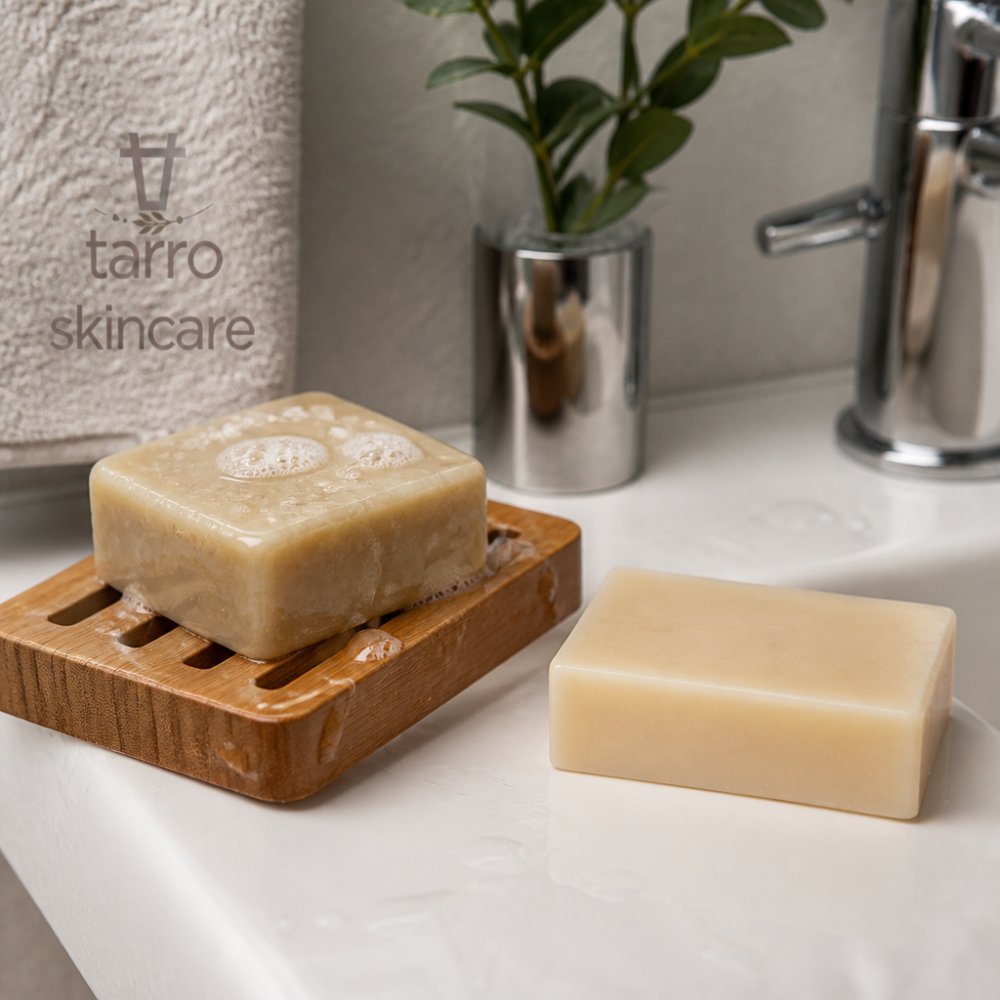
Look for raised ridges, angled slots or a self-draining design. Avoid flat ceramic dishes that trap water. If your bar still feels soft, the dish is usually the culprit.
Troubleshooting: Why Your Tallow Soap Turns Soft or Dissolves Quickly
A soft or fast-dissolving tallow bar can have several causes, including too little cure time, too much water in the recipe, a high superfat, or poor storage. The trick is working out which one you have before you change anything, because the fixes pull in different directions.
Diagnose first
- Did the bar ever feel hard? If it was firm out of the mould and went soft in the bathroom, the problem is storage, not the recipe.
- Is the whole batch soft, or only the bars in use? Batch-wide softness points to water, superfat or cure; isolated softness points to the dish and the room.
- Does the bar sweat or leave a sticky film? That is usually a high superfat or trapped moisture during cure.
- Did it dissolve quickly but stay hard? A hard bar that wears fast often has a high coconut oil share, which makes a soluble, quick-lathering bar.
Match the cause to the fix
- Under-cured: give it the full four to six weeks, and longer if the recipe is water-heavy. Weigh weekly until the loss flattens.
- Too much water: recalculate with a lye calculator and reduce the water-to-lye ratio next batch. Do not add extra lye to a made batch, that unbalances the recipe.
- High superfat: lower it slightly next batch. A modest superfat keeps the bar firm; a generous one leaves free oil that softens the surface.
- Wet storage: switch to a draining dish and let the bar air-dry between uses.
- Soft oils dominate: increase the tallow share and trim the olive oil. Tallow leads on hardness; coconut adds cleansing and lather but too much makes a soluble bar.
What you can and cannot fix after the fact
A batch that is under-cured can be rescued by time, put it back on the rack and wait. A batch with too much water or too high a superfat will not harden much beyond its recipe limit; the honest fix is to reformulate the next batch. For a bar already in use, storage is the only lever you have, and it is often enough on its own.
Measuring whether your fix worked
Track days of use for one bar under consistent conditions, same dish, same bathroom, same number of washes, and compare against the previous bar. That gives you a repeatable read on whether a recipe or storage change actually helped, rather than a vague sense that soap disappears fast.
If a bought bar dissolves fast, the problem is almost always storage. A dry bar lasts far longer than a wet one, whatever the recipe. Watch out: if you reformulate, recalculate lye and water from scratch and wear gloves and eye protection, never adjust a recipe by guesswork.
Pick Up a Bar That's Built to Last
A hard, well-cured tallow bar rewards good habits. Cure it properly, store it dry, and give it a dish that drains. Do those three things and a single bar goes a long way.
At Tarro, our soaps are built on a tallow base. Browse the full soap range to find your next bar. Try the Bare Skin Bar unscented tallow soap for a gentle, fragrance-free option. Or choose the Golden Bar honey and lavender tallow soap for an everyday scented bar, or the Earth Bar charcoal and clay tallow soap for a deeper clean.


Get started with Tarro and make every bar last longer.
Frequently Asked Questions
How long should tallow soap cure before use?
Tallow soap is generally cured for several weeks before use. During curing, water evaporates from the bar. To check readiness, feel the bar: it should be firm and dry to the touch.
Why does my tallow soap get soft or dissolve quickly?
Soft or fast-dissolving tallow soap usually points to too much water in the recipe, insufficient cure time, or a bar that stays wet between uses. Also review storage: a bar left in standing water can soften quickly. Keeping the bar dry between washes can help it last longer.
How can I make cold process soap last longer?
Storing bars in a dry, ventilated place away from direct water can help them last longer. Letting each bar dry fully between uses also helps.
What kind of soap dish helps a tallow bar last longer?
A soap dish with drainage slots or ridges that lift the bar out of standing water is best. Look for ceramic, wooden, or bamboo dishes with gaps that let water run off and air circulate underneath. Avoid flat, non-draining dishes that trap moisture.
Making soap last is really a test of small habits. Cure it fully, keep it dry, and give it a dish that drains. Tarro's cold-process tallow soaps are made to reward that care, with grass-fed tallow and traceable ingredients that support your skin's natural barrier. Add to Cart and put these tips to work.


