

How Can You Support Your Skin Lipid Barrier Naturally?
Last Updated: October 26, 2026
Quick Summary
Support your lipid barrier naturally by removing what strips it, then replenishing with lipid-rich ingredients like tallow, jojoba oil and squalane. Stop all actives for two weeks and rebuild the barrier first, then reintroduce one product at a time, twice weekly, for a fortnight. Choose short ingredient lists with no added fragrance or alcohol.
- A healthy barrier depends on ceramides, fatty acids and cholesterol in roughly balanced proportions.
- Stop all actives for two weeks and rebuild the barrier before reintroducing them.
- Reintroduce one product at a time, twice weekly, for a fortnight before increasing frequency.
- Avoid essential oils and fragrance on compromised skin until it has fully recovered.
- Skip scrubs, masks and exfoliating acids until skin has felt calm for at least four weeks.
Table of Contents
- What the Skin Lipid Barrier Does and Why It Matters
- Signs Your Barrier Is Compromised and What Causes It
- Natural Ingredients for Skin Barrier Repair
- A Skin Barrier Repair Routine for Dry Skin
- Foods That Support Skin Barrier Health
- How Long Does Skin Barrier Repair Take?
- When to See a GP or Dermatologist About Barrier Damage
- Building Your Barrier-Support Routine with Tarro
- Frequently Asked Questions
What the Skin Lipid Barrier Does and Why It Matters
Your skin's lipid barrier is the thin, oily layer that sits between you and everything else, and it is the single biggest factor in whether your skin feels comfortable or tight by mid-afternoon. Skin cells are the bricks, and the lipids packed around them hold the whole structure together so water stays in and irritants stay out.
Research in the Journal of Dermatological Science review on the skin lipid barrier describes these lipids as working alongside proteins to provide the skin's barrier function. When that lipid layer thins, moisture escapes faster and skin reacts to things it used to tolerate.
Ceramides, Fatty Acids and Cholesterol: The Three Barrier Lipids
A healthy barrier depends on three lipids in roughly balanced proportions: ceramides, fatty acids and cholesterol. Ceramides are the most abundant, fatty acids give the barrier its flexibility, and cholesterol helps the whole mixture stay fluid enough to function.
Most barrier-support products focus on ceramides alone. That misses the point. A barrier short on fatty acids will still leak moisture even after you add ceramides. The Tarro Ingredient Directory shows which ingredients in Tarro products supply these barrier lipids and where they come from.
Signs Your Barrier Is Compromised and What Causes It
Stinging on products that never used to sting is one possible signal. Other signs can include tightness after washing, flaking around the nose and cheeks, redness that lingers, and itching that worsens in dry indoor air. A compromised barrier loses water too quickly, a process called transepidermal water loss.
Common causes stack up quietly:
- Over-cleansing with hot water or foaming washes
- Retinoids and exfoliating acids used more often than skin can tolerate
- Cold weather, central heating and wind
- Frequent hand washing or long hot showers
- Stress and poor sleep, which slow recovery
How to Spot Overuse of Actives and Reintroduce Them Safely
The tell is timing. If skin stings within minutes of applying an acid or retinoid, or flakes in the days after, you are past your tolerance. Stop all actives for two weeks and rebuild the barrier first. Then reintroduce one product at a time, twice weekly, for a fortnight before increasing frequency. If the stinging returns, step back a level and stay there.
Natural Ingredients for Skin Barrier Repair
Natural ingredients can support the skin barrier, but "natural" does not automatically mean safe or effective. Some plant oils and butters contain fatty acids that mimic skin lipids, while others contain fragrant compounds.
Ingredients with Reasonable Evidence
- Tallow from pasture-fed cattle is rich in oleic, palmitic, and stearic fatty acids, which are similar to those found in skin. It is highly occlusive and well tolerated by many, though its animal origin is a personal choice.
- Jojoba oil is structurally close to skin's own sebum and is generally well tolerated. It is a wax ester rather than a triglyceride, which makes it stable and less likely to clog pores.
- Squalane (often derived from olives) is a lightweight, stable oil that mimics a component of skin's lipid barrier. It is well absorbed and rarely irritating.
- Argan oil contains linoleic acid and vitamin E. Small studies suggest it may improve skin hydration and barrier function, but evidence is limited.
- Beeswax forms a breathable protective layer that reduces water loss. It is a common ingredient in balms and is generally safe, though some people with bee-product allergies should avoid it.
- Sweet almond oil is high in oleic and linoleic acids and is a good emollient. Patch-test if you have nut allergies.
Ingredients to Approach with Caution
Essential oils (such as lavender, tea tree, and citrus) and botanical extracts are often marketed as natural but can cause contact dermatitis, especially on compromised skin. Fragrance, even natural fragrance, is a common irritant. If your barrier is damaged, avoid products containing essential oils until skin has fully recovered.
How to Choose a Natural Barrier Product
Look for short ingredient lists with a base of lipid-rich oils or butters, no added fragrance, and no alcohol. A well-designed product will list the plant source of each oil. Our Bare Skin Balm combines tallow, jojoba, and squalane in a fragrance-free formula.

The Limits of Natural Ingredients
No natural ingredient can repair a barrier that is being stripped daily by harsh cleansers or overused actives. Remove the cause first. If you have a diagnosed skin condition such as eczema or rosacea, natural ingredients may support but not replace medical treatment. Persistent symptoms need assessment by a GP or dermatologist.
A Skin Barrier Repair Routine for Dry Skin
A barrier-repair routine should be built around your skin type, not a one-size-fits-all template. The goal is to remove irritants, replenish lipids, and reduce water loss without overloading skin that is already reactive. Below is a staged framework for four common presentations. Adjust based on how your skin feels, not how it looks on any given day.
Dry Skin
Morning:
Evening:
Weekly: Nothing abrasive. Skip scrubs, masks, and exfoliating acids until skin has felt calm for at least four weeks. Flaking is often a sign of barrier damage, not dead skin that needs removing.
Oily and Acne-Prone Skin
Morning:
Evening:
Weekly: Avoid physical scrubs. If you use a chemical exfoliant, limit to once weekly and only after skin has been calm for a month. Watch for stinging or flaking as a sign to pause.
Reactive and Sensitive Skin
Morning:
Evening:
Weekly: Introduce nothing new. Patch-test any new product on your inner forearm for three nights before applying to your face.
Combination Skin
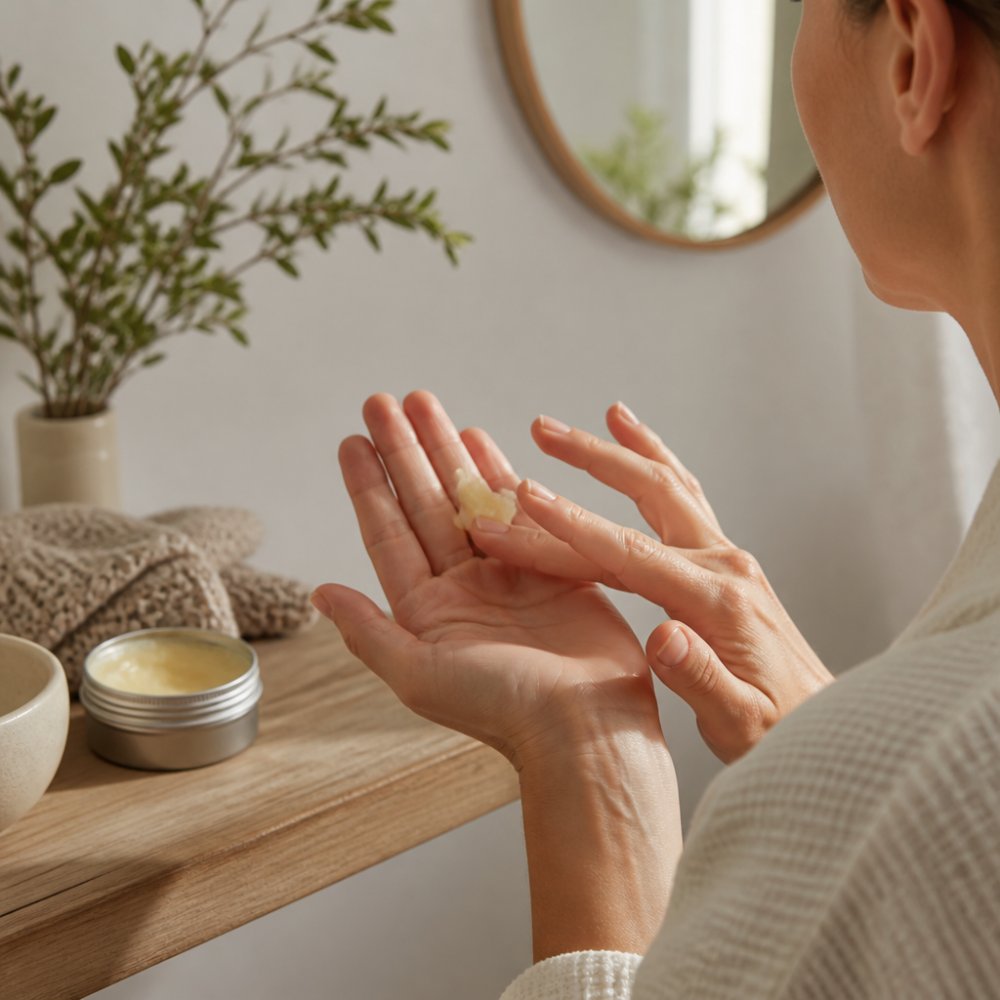
Our Bare Skin Balm and Cloud Cream are formulated to fit into these routines. For a gentle cleanser, our Bare Bar Unscented Tallow Soap works for most skin types, but if you are very reactive, start with water-only rinses.

Foods That Support Skin Barrier Health
Diet plays a supporting role, not a leading one. A review of dietary interventions on skin barrier function reports that small studies suggest oils rich in omega-3 fatty acids may improve barrier function, though the authors describe those studies as small. Treat food as potential rather than proven.
How Long Does Skin Barrier Repair Take?
| Stage | What You'll Notice | Typical Timing |
|---|---|---|
| Calming | Less stinging, less tightness | Week 1-2 |
| Rebuilding | Reduced flaking, softer texture | Week 2-4 |
| Settling | Redness fades, tolerance returns | Week 4-8 |
| Maintaining | Stable comfort, actives reintroduced | Week 8+ |
When to See a GP or Dermatologist About Barrier Damage
Also seek advice if a rash appears suddenly after a new product, or if skin becomes hot and swollen. Our blog covers related guidance on barrier care if you want to read more before deciding on next steps.
Building Your Barrier-Support Routine with Tarro
Tarro's range includes grass-fed tallow and traceable ingredients. Start with the Bare Skin Balm at £10.00 for face, hands and exposed skin, or step up to the Bare Skin Wellness Recovery Bundle at £36.00 if you want the mist-and-balm pairing for post-sauna or cold-water recovery.

Frequently Asked Questions
How can you support the skin's lipid barrier naturally?
Start with a gentle cleanser and lukewarm water, then apply a lipid-rich moisturiser to damp skin to reduce moisture loss. Avoid over-cleansing and stagger exfoliating acids and retinoids. A review in the Journal of Clinical and Aesthetic Dermatology (2016) found that a gentle, non-irritating cleanser plus a well-designed barrier-repair formulation can improve skin condition. A no-water tallow balm applied after bathing seals in hydration without added fragrance.
Which natural ingredients help support the skin barrier?
Look for ingredients such as tallow, jojoba, olive oil, olive squalane, argan oil and beeswax.
What foods support healthy skin barrier function?
Oils rich in omega-3 fatty acids, such as flaxseed oil and oily fish, are the most cited dietary option. A 2021 review in the Journal of Dermatological Science reported that small studies suggest omega-3-rich oils may improve barrier function, but the authors stressed the studies were small. Treat diet as a supporting factor rather than a fix, and focus first on cleansing and moisturising habits.
How long does it take for a damaged skin barrier to recover?
Most people notice less tightness and flaking within one to two weeks of stopping irritants and moisturising consistently, with fuller recovery over four to six weeks. The 2021 review notes that evidence for dietary approaches is limited and based on small studies, so timelines vary. If redness, itching or cracking worsens after a month, see a GP or dermatologist to rule out eczema or rosacea.
What skincare ingredients can weaken the skin barrier?
High-strength exfoliating acids, frequent retinoid use, alcohol-heavy toners, harsh foaming cleansers and fragrance can all strip or irritate the barrier. Over-cleansing with hot water does the same. If skin stings when you apply products that used to feel fine, that is a signal to pause actives. Reintroduce one product at a time, twice a week, and stop if irritation returns.
How can you tell if your skin barrier is damaged?
Common signs can include tightness after washing, flaking, redness, stinging on application and skin that feels dry despite moisturiser.
Your barrier did not break overnight and it will not rebuild overnight, but a short, consistent routine will get you there. Get started with Tarro and give your skin the lipids it needs to hold on to its own moisture.


