

Does Tallow Balm Absorb Into Dry Skin? A Practical Guide
Table of Contents
- Does Tallow Balm Absorb Into Dry Skin?
- How to Use Tallow Balm for Best Results
- How Long Does Tallow Balm Take to Absorb?
- Why Does Tallow Balm Feel Greasy?
- Can Tallow Balm Dry Out Skin?
- Patch Testing, Allergies, and When to Stop
- Choosing a Tallow Balm: What to Look For
- Frequently Asked Questions
Last Updated: October 19, 2026
Does Tallow Balm Absorb Into Dry Skin?
Yes, tallow balm absorbs into dry skin, but not as most people expect.
At Tarro, we make waterless tallow balms from pasture-fed British tallow. Tallow balm sinks in gradually and helps your skin hold onto water, but it cannot hydrate dry skin on its own.
Below: what happens when tallow meets dry skin, how to apply it so it works, and how to tell whether it is helping.
Absorption vs. moisture sealing: what actually happens
Absorption means a product passes into the upper layers of the skin. Moisture sealing means a product sits on the surface and slows water loss.
Tallow balm does both, in that order.
The practical rule: balm seals, water hydrates. On skin that already holds water, tallow balm works well. On bone-dry skin it softens the surface but cannot add water that is not there.
How to Use Tallow Balm for Best Results
The best results come from applying tallow balm to slightly damp skin, using a small amount, and massaging it in properly. Timing matters more than quantity.
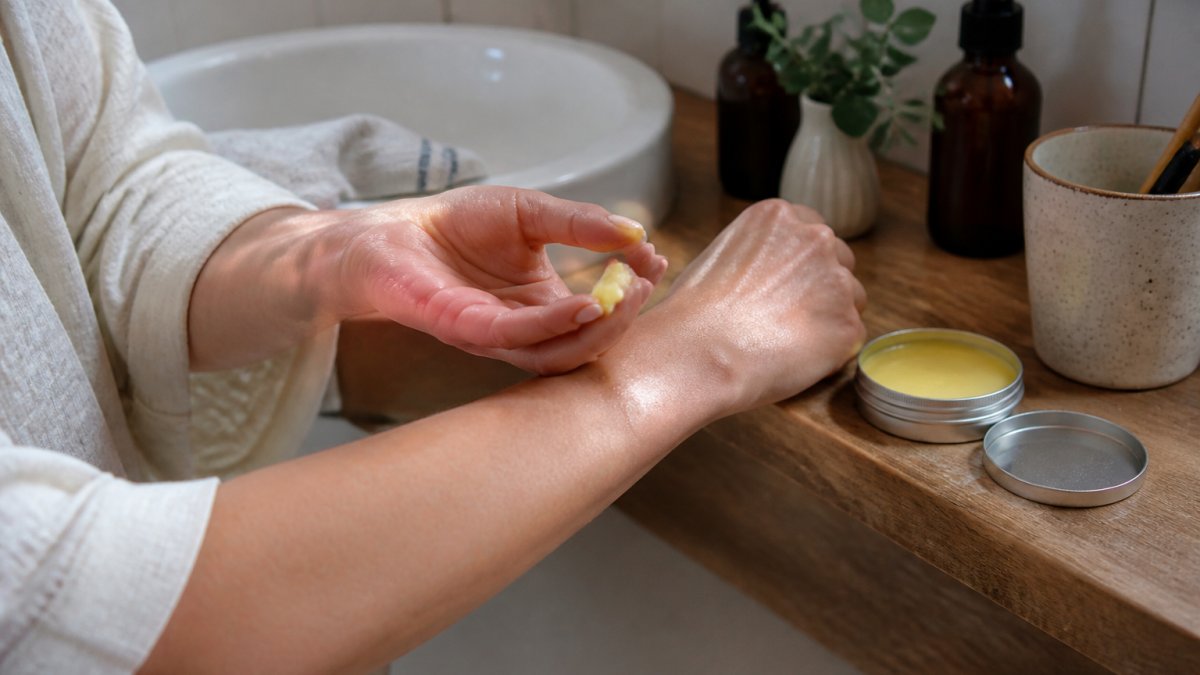
A step-by-step method for very dry skin
- Cleanse gently. Use lukewarm water, not hot. Hot water strips oils and makes dryness worse.
- Pat, do not rub. Leave the skin slightly damp after washing or bathing.
- Take a pea-sized amount. For the face, that is genuinely enough. Use a fingertip-sized amount for arms, legs, or cracked heels.
- Warm it between your fingertips. Tallow balm is firm in the tin. Body heat turns it spreadable in seconds.
- Press and massage into the skin. Work in small circles until the balm disappears.
- Reapply to problem areas. Dry elbows, cracked heels, and hands benefit from a second thin layer.
Most people who find tallow balm greasy are using three times too much.
Pro Tip
Apply your balm within a minute or two of patting dry after a bath. That window is when your skin holds the most water, and sealing it in then gives you the best result from the least product.
How Long Does Tallow Balm Take to Absorb?
Tallow balm typically takes 10 to 20 minutes to absorb fully, depending on how much you apply and where. Thin layers on the face settle in faster.
You will feel a soft film at first, that is normal and part of how the balm works.
Absorption time also depends on the formula. A whipped balm like our Cloud Cream settles faster than a firm, dense balm. Neither is better; they suit different routines and skin.

Why Does Tallow Balm Feel Greasy?
Tallow balm feels greasy for three main reasons: too much product, application to bone-dry skin, or a formula high in waxes or hard butters that sit on the surface. Tallow is a rich, dense fat, so a little goes a long way, and greasiness is not the same as poor absorption.
A balm that feels greasy for the first few minutes is behaving normally: the oils melt against your skin temperature before settling, and that film is the occlusive layer doing its job.
The three common causes, and what to do about each
1. Too much product. This is the most common cause by a wide margin. Most people who describe a tallow balm as greasy use two to three times the amount needed.
2. Dry skin underneath. Balm drags on dry skin, so you use more and the excess sits on top.
3. Formula and texture. A firm, dense balm with high wax content always feels heavier than a whipped one.
How much to use, by area
- Face: a pea-sized amount, warmed between fingertips until it turns translucent
- Hands: a rice-grain amount per hand, massaged into the backs of the hands and knuckles
- Elbows and knees: a small fingertip amount, worked in until absorbed
- Cracked heels: a thin layer, then socks overnight to keep it in place
- Whole body: a thumbnail-sized amount per limb, applied to damp skin after bathing
If residue remains after 20 minutes, halve your next application. If skin still feels tight, you need water first, not more balm: greasiness means too much product, tightness means too little water.
Watch Out
Applying a thick layer of balm to completely dry skin is the most common mistake. It sits on the surface, feels greasy, and does little for tightness. Dampen the skin first, then use less than you think you need. If you have been layering balm onto dry skin and finding it greasy, try the damp-skin method for a week before deciding the product is not for you.
Greasy versus absorbed: how to tell the difference
A balm that has absorbed feels soft and slightly cushioned, but not slippery. If your finger slides, product remains on the surface; if it presses in with slight resistance and no shine transfers, the balm has settled.
A balm still slippery after an hour on damp skin with a pea-sized amount is probably too rich for your skin type or climate; one that settles after five minutes is working as intended.
Can Tallow Balm Dry Out Skin?
Tallow balm can make skin feel drier in specific circumstances: used as the only moisturiser on very dry skin with no water underneath, when the formula contains an ingredient your skin reacts to, or when a thick layer is applied to compromised skin. For most people, though, a well-made tallow balm supports the skin barrier rather than harming it.
Your skin barrier is a mix of lipids, fatty acids, cholesterol, and ceramides, that hold water in (pubmed.ncbi.nlm.nih.gov). Tallow is rich in oleic, palmitic, and stearic acids, which mirror part of that profile. On damp skin it helps the barrier slow water loss; on dry skin it softens the surface but cannot supply missing water.
Three things that can go wrong
1. No water underneath. Balm seals, so with no moisture to seal, skin stays tight, the most common reason people conclude tallow balm dried their skin out.
2. Irritation from added ingredients. Fragrance, essential oils, and some plant extracts suit some skin types and not others.
3. Over-application on compromised skin. A thick layer on skin that is already cracked, weeping, or inflamed can trap heat and make the area feel worse.
How to tell whether the balm is helping or worsening dryness
Use a simple two-week trial and look for observable signs rather than relying on how your skin feels on any single day.
Signs the balm is helping:
- Skin feels softer and more supple within 30 minutes of application
- Tightness after washing is less noticeable than before you started
- Flaking decreases over the first week
- The balm settles within 20 minutes rather than sitting slippery
- You need less balm to cover the same area by the end of week two
Signs the balm is not helping, or is worsening things:
- Tightness persists or increases despite applying to damp skin
- Redness, itching, or a rash develops or spreads
- Flaking increases rather than decreases
- Skin feels hot, weepy, or more sensitive than before
- You need to apply more balm each day to get the same effect
The first three to four days of a new balm may bring a slight change, a little tighter after washing, a little greasier, before it settles. That is usually the skin adapting, not a reaction.
Key Takeaway
Tallow balm supports the skin barrier and helps it retain moisture. It does not replace water. Damp skin plus a small amount of balm is the combination that works. If your skin feels drier after a week of use, stop and reassess, that is a signal, not a failure. Distinguish temporary greasiness from persistent tightness, flaking, or irritation, and give any new balm a two-week trial on damp skin before drawing conclusions.
When to stop and seek advice
Stop using the balm and speak to a pharmacist or GP if you notice persistent redness or swelling, itching that gets worse rather than better, a rash that spreads, or cracked skin that starts to weep or feel hot. These are signs of irritation or possible infection, not something to push through.
Patch Testing, Allergies, and When to Stop
Patch test any new balm before using it on your face. Apply a small amount to your inner forearm, leave it for 24 hours, and check for redness, itching, or swelling.
Tallow is a animal-derived ingredient, so people with known sensitivities to beef or dairy should be cautious. Fragrance-free formulas are the safer starting point for reactive skin. Our Calm Balm is made with just tallow and argan oil for exactly this reason.
Stop using the balm and speak to a pharmacist or GP if you notice:
- Persistent redness or swelling
- Itching that gets worse, not better
- A rash that spreads
- Cracked skin that starts to weep or feel hot
These are signs of irritation or possible infection, not something to push through.
Pro Tip
If you have eczema, rosacea, or a diagnosed skin condition, introduce a new balm on one small area first and keep the rest of your routine unchanged. That way you can tell what is actually causing a reaction.
Choosing a Tallow Balm: What to Look For
A good tallow balm has a short ingredient list, a firm but spreadable texture, and a traceable source. Everything else is preference.
Use this checklist before you buy:
- Tallow is the first ingredient listed
- The ingredient list is short and readable
- The balm is waterless, with no added water or fillers
- Fragrance-free options are available if your skin is reactive
- The maker can tell you where the tallow comes from
- The tin or packaging states a use-by period after opening
- The texture is firm in the tin and melts on contact with skin
At Tarro, our tallow comes from pasture-fed British farms and we keep formulas short on purpose. Our Bare Skin Balm is fragrance-free and built for skin stressed by heat, cold, or over-cleansing; our Whipped Glow Skin Balm suits drier, duller skin in colder months.


If you want a simple routine, you do not need five products. One balm, applied correctly to damp skin, does most of the work.
Dry, tight skin is frustrating, and most moisturisers only half-solve it. Start with our fragrance-free Bare Skin Balm for reactive or stressed skin, or Cloud Cream for an overnight treatment.
Frequently Asked Questions
Does tallow balm absorb into dry skin?
Yes, but not in the way a water-based moisturiser does. Tallow balm is a waterless, oil-based product, so it does not add water to the skin. Instead, its fatty acids melt on contact with body heat and sink into the upper layers, where they form a breathable, occlusive layer that helps seal in moisture already present. For best results, apply tallow balm to slightly damp skin after washing or bathing, so it can trap that water rather than simply sitting on a dry surface.
How long does tallow balm take to absorb?
Most people find that a small amount of tallow balm absorbs within 5 to 15 minutes, depending on skin type, room temperature, and how much was applied. Very dry or cold skin may take closer to 20 minutes, while a heavy layer can feel greasy for longer. Warming the balm between fingertips before pressing it in speeds up absorption. If it still feels tacky after half an hour, you likely used too much.
Why does tallow balm feel greasy on my skin?
Tallow balm is an occlusive, emollient product with no water content, so a little goes a long way. Feeling greasy usually means too much was applied, or it was spread on dry skin that could not take it up. Try a pea-sized amount for the face, warm it between your palms first, and press rather than rub. Applying to slightly damp skin after bathing also helps the balm spread more thinly and absorb faster, leaving less residue.
Can tallow balm make dry skin feel drier?
It can, if used incorrectly. Because tallow balm seals rather than hydrates, applying it to completely dry skin without any water underneath can leave skin feeling tight or coated. The fix is to mist or pat skin slightly damp before applying, or to layer it over a water-based hydrating product. If dryness, redness, or irritation worsens after use, stop applying it and patch test on a small area first. Persistent dryness may need a different approach.


