

7 Steps to Choose Tallow Deodorant for Sensitive Underarms
Last Updated: October 29, 2026
Quick Summary
Choose tallow deodorant for sensitive underarms by identifying your trigger ingredient first, since baking soda, fragrance, essential oils and alcohol cause most reactions rather than the tallow itself. Start with an unscented, baking soda free formula and patch test it on your inner forearm for a day or two before use.
- Baking soda reactions can appear after a few days rather than instantly, so note whether it was in every product that irritated you.
- Baking soda free formulas use zinc oxide and magnesium hydroxide for odour control instead of bicarbonate.
- Apply a pea-sized amount per underarm, since excess balm sits on the surface and can feel tacky.
- Keep your old antiperspirant for high-sweat days during weeks one to three of the switch.
- Tarro deodorant balms use grass-fed tallow, are aluminium-free and priced at £14.00 each.
Table of Contents
- Start With Your Underarm Skin, Not the Label
- Know Which Ingredients Trigger Underarm Irritation
- Why Baking Soda Free Tallow Deodorant Suits Reactive Skin
- Soothing Ingredients for Underarm Irritation to Look For
- How to Patch Test a New Tallow Deodorant
- How to Transition to Natural Deodorant Without a Rash
- Match the Format and Scent to Your Skin
- Pick Your Tarro Balm and Start With a Patch Test
- Frequently Asked Questions
Start With Your Underarm Skin, Not the Label
The best tallow deodorant for sensitive underarms is the one that matches your skin's actual reaction pattern, not the one with the longest "free-from" list. Most people shop the label first. That is backwards.
Your underarm skin is thin, folds on itself, and sits on lymph-rich tissue. It reacts faster than the skin on your arms or legs. So start by asking three questions:
- Does your skin sting, itch or go red within minutes of applying a product?
- Do you react to scent, or only to baking soda?
- Is your skin dry and tight, or oily and prone to blocked pores?
Answer those honestly and the shortlist shrinks fast. If dryness and tightness are your main issue, our guide to tallow vs plant-based moisturisers for dry, sensitive skin explains why fat-based formulas behave differently on a compromised barrier.
Tallow deodorant is a deodorant built on rendered animal fat, usually grass-fed beef tallow, combined with mineral odour fighters and often essential oils. The fat base is the point. It sits close to the skin's own lipid mix.
Know Which Ingredients Trigger Underarm Irritation
Most tallow deodorant irritation is not caused by the tallow. It is often caused by one of several add-on ingredients, and the reaction pattern can help you identify which one. Learn to read the pattern and you can shortlist a formula in minutes rather than trial-and-erroring your way through the category.
Baking soda (sodium bicarbonate). A common ingredient in natural deodorants and a known irritant for some people. Reactions can be delayed rather than instant, which is why people sometimes blame the wrong product.
Synthetic fragrance and essential oils. Both can contain aromatic compounds that some people react to. Essential oils are not automatically gentler than synthetic fragrance, and a botanical blend can trigger a reaction on reactive skin. Fragrance-free is the safer starting point for reactive underarms, and "natural fragrance" on a label does not change that.
Alcohol (ethanol, denatured alcohol). Can cause a stinging sensation on some skin, especially after shaving, and is often used for a quick-dry feel.
Propylene glycol and other carriers. Common in conventional sticks and some natural balms, and a possible irritant for some people.
Aluminium salts. Some people prefer to avoid them. They are used in antiperspirants, which work differently from deodorants.
Bicarbonate-adjacent ingredients. Some formulas swap sodium bicarbonate for other ingredients and market themselves as baking-soda-free. Patch testing them is sensible, as with any new product.
Here is the pattern to watch for:
- Baking soda: stinging or redness, sometimes appearing after a few days
- Synthetic fragrance: itching or burning
- Essential oils: a reaction that may build over several days
- Alcohol: a sting, especially after shaving
- Propylene glycol: irritation where the product was applied
A common mistake is blaming "natural" as a category after one bad product, when the cause is often a single ingredient. Another is assuming a scented balm is fine because the scent is botanical; unscented is a sensible starting point for highly reactive skin.
Pro Tip
If you have reacted to more than one natural deodorant, note whether baking soda was in both. That single check narrows the field faster than any free-from list.
Once you know your trigger, you can shortlist products with a short ingredient list, no added fragrance, and a fat base.
Why Baking Soda Free Tallow Deodorant Suits Reactive Skin
A baking soda free tallow deodorant omits one common ingredient while keeping a fat base, which some people with reactive skin may find suitable.
Instead of bicarbonate, makers use zinc oxide and magnesium hydroxide to manage odour. Industry guidance for sensitive skin points to non-nano zinc oxide as an active that lets brands cut baking soda while keeping odour control, per Fatco's sensitive skin formulation guidance.
The tallow itself does the soothing work. It is rich in fatty acids that mirror the skin's own barrier lipids. A review on tallow and its biocompatibility with skin examines these claims, though it does not settle them, so treat the barrier benefit as promising rather than proven.
Our Bare Skin Deo unscented tallow deodorant balm is formulated with no essential oils and no added fragrance.

Soothing Ingredients for Underarm Irritation to Look For
Some formulas contain ingredients such as zinc oxide, magnesium hydroxide, shea or cocoa butter, colloidal oatmeal, and vitamin E. Checking the full ingredient list is a good habit.
Zinc oxide and magnesium hydroxide are used in some deodorant formulas for odour control.
Bare Skin Deo. Unscented Tallow Deodorant Balm →
Skip anything with a long ingredient list if your skin is highly reactive. Fewer ingredients means fewer triggers. That advice shows up repeatedly in current sensitive-skin guidance, including Mags Skin's sensitive skin deodorant guide.
For a deeper look at barrier repair, read our article on how to support your skin lipid barrier naturally.
How to Patch Test a New Tallow Deodorant
Patch testing before first use is a sensible precaution. Apply a small amount to your inner forearm and leave it alone for a day or two.
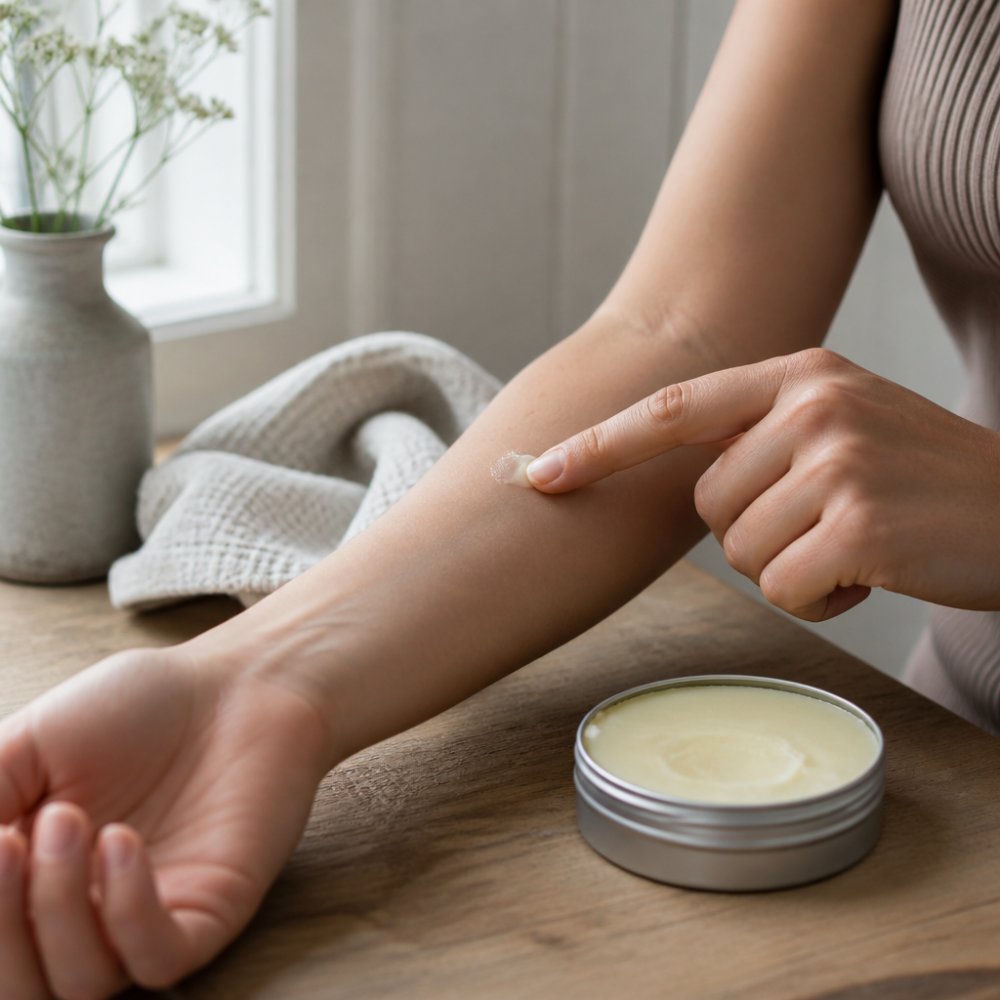
A simple approach:
- Wash and dry your inner forearm.
- Apply a small amount and let it absorb.
- Note any sting, heat or redness over the next day.
- If your skin stays calm, you may try a small amount under one arm.
Watch out: freshly shaved skin can be more sensitive, so you may prefer to wait after shaving before testing.
How to Transition to Natural Deodorant Without a Rash
Switching from an antiperspirant to a tallow deodorant is a change of mechanism, not just a change of product. Antiperspirants and deodorants work in different ways. Adjusting to a new product can take some time, and it can help to distinguish between a temporary change in odour and any irritation.
Odour changes. When switching from an antiperspirant, some people notice a temporary change in odour before it settles. This is not necessarily a sign the product has failed.
Irritation. If skin becomes red, itchy or sore, stop using the product and patch test it on your forearm before trying again.
A transition plan that works with a tallow balm specifically:
- Apply in the evening if you prefer. An evening application may suit some people's routines.
- Use less than you think you need. A pea-sized amount per underarm is enough for most people. Excess balm sits on the surface, mixes with sweat, and can feel tacky or transfer to clothing.
- Keep the old antiperspirant for high-sweat days during weeks one to three. Phase it out rather than stopping cold, especially in warm weather or during exercise.
- Let skin dry before applying. Applying to dry skin is generally the usual approach.
- Exfoliate gently if you wish. Gentle methods are generally preferable to harsh scrubbing.
- Consider reapplying after heavy sweating. Applying to dry skin afterwards is the usual approach.
Managing odour during the transition. Some people find a mid-day refresh with a damp cloth helpful. If odour is strong, reviewing how much product you apply may help.
When to stop. If you develop a rash, stop using the product and consider speaking to a pharmacist or GP.
Watch Out
The "detox" label is used loosely in the category. There is no evidence that underarms store toxins that a deodorant draws out. What is real is a temporary shift in skin bacteria and sweat output when you stop using an antiperspirant. Treat odour as an adjustment, and treat a rash as irritation, never push through a rash.
If you are moving from a conventional stick, our guide to tallow vs plant-based moisturisers for dry, sensitive skin covers how fat-based formulas differ from plant-based ones.
Match the Format and Scent to Your Skin
Format matters as much as ingredients when your skin is reactive. Balms and sticks have different textures, which may affect how a product feels to apply.
Scent is the other half. Unscented products are a common starting point for people with sensitive skin. If you want fragrance, test any new product first.
| Format | Best for | Watch out for |
|---|---|---|
| Unscented balm | Reactive, first-time users | Nothing, if patch tested |
| Botanical scented balm | Daily wear, mild sensitivity | Essential oil reaction |
| Active balm with bicarbonate | Heavy sweat, sport | Baking soda irritation |
| Stick | Convenience | More drag on dry skin |
Our scented options include Meadow Deo botanical tallow deodorant balm and Active Deo natural tallow deodorant balm.


Pick Your Tarro Balm and Start With a Patch Test
Choosing well can come down to considering your reaction history, whether you tolerate baking soda, and whether you want scent.
At Tarro, our deodorant balms are made with grass-fed tallow and come in a waterless balm format. Each is priced at £14.00 and is aluminium-free. The unscented version is a sensible starting point if your skin is reactive.
Frequently Asked Questions
Can you use tallow as deodorant?
Yes. Tallow works as the base of a deodorant rather than as a deodorant on its own. A finished tallow deodorant pairs the fat with odour-fighting minerals such as zinc oxide and magnesium hydroxide, which is how Tarro's balms are built. Check the full ingredient list before buying, because the base alone tells you little about how well the product controls odour.
Does tallow deodorant contain baking soda?
Some do, some do not, so read the label every time. Baking soda is a common irritant on sensitive skin, which is why baking soda free tallow deodorant is worth seeking out if your underarms sting or go red. Tarro's Bare Skin Deo and Meadow Deo are made without sodium bicarbonate, while Active Deo includes it for stronger odour control during sport. If you have reacted to natural deodorants before, start with an unscented, bicarbonate-free balm and patch test it for a few days.
How do I transition to natural deodorant without irritation?
Switch gradually rather than stopping antiperspirant overnight. Apply the new balm on clean, dry skin, hold the stick or scoop against your underarm for 5 to 10 seconds so it melts, then swipe gently. Use a pea-sized amount, and give your skin two to four weeks to adjust. If redness appears, stop for a few days and restart with a smaller amount. Choosing a fragrance-free, baking soda-free formula for the first month lowers the chance of a reaction while your skin settles.
Why is my deodorant making my underarms itchy?
Itching can sometimes point to an ingredient your skin does not tolerate. Shaving just before applying may increase sensitivity. Stop using the product and let the skin settle, then reintroduce a minimal formula with no added fragrance. Patch test on your inner arm first. If itching, redness or swelling persists or spreads, speak to a pharmacist or GP, as contact dermatitis may need treatment beyond switching products.
The hardest part is not finding a formula. It is trusting one after being let down before. Patch test, start unscented, and give your skin two weeks. Get started with Tarro and choose a tallow deodorant built for sensitive underarms.


