

Best Natural Skincare Ingredients for Dry Winter Hands
Last Updated: October 31, 2026
Quick Summary
The best natural skincare ingredients for dry winter hands are rich plant butters and barrier oils such as shea, cocoa butter, jojoba, almond, argan and olive oil, plus beeswax to seal the barrier. Apply a lipid-rich balm to slightly damp hands after every wash, and use lukewarm water and gentle soap to stop stripping the skin.
- The skin barrier is made of skin cells held together by ceramides, cholesterol and fatty acids.
- Cocoa butter suits knuckles and finger sides, where skin is thickest and cracks first.
- Jojoba is closest to skin's own sebum but is too lightweight alone in deep winter.
- Apply balm to slightly damp hands so the lipid layer traps that water.
- Patch test new products on the inner forearm and wait a full 24 hours.
Table of Contents
- Why Winter Wrecks Your Hands and Which Ingredients Help
- Natural Remedies for Dry Hands That Actually Work
- The Best Oils for Dry Hands, Ranked by What They Do
- Beeswax and Plant Waxes: The Protective Barrier Step
- How to Repair Dry Cracked Hands Without Making It Worse
- A Simple Hand Care Routine for Winter
- Choosing a Balm for Your Hands This Winter
- Frequently Asked Questions
Why Winter Wrecks Your Hands and Which Ingredients Help
Cold air holds less moisture, indoor heating pulls more of it out of your skin, and every wash strips a little more oil away. That combination is why so many of us end up with dry winter hands by December, no matter how much hand cream we keep in our bags.
At Tarro, we make tallow and plant-based balms, so we think hard about what keeps skin comfortable through winter. Most dry hands are a barrier problem, not a hydration problem: water-based lotion evaporates straight back out if the lipid barrier is compromised.
Below, we break down the natural skincare ingredients that genuinely help, ranked by what they do rather than what sounds nicest on a label. A long ingredient list is not the same as a good one, and a short list of the right lipids usually beats a long list of fashionable extracts.
How the Skin Barrier Fails in Cold Weather
The skin barrier is the outermost layer of skin, made of flattened skin cells held together by a mix of ceramides, cholesterol and fatty acids. Think of it as mortar between bricks. When that mortar is intact, water stays in and irritants stay out.
Cold weather attacks it from two directions: low humidity pulls moisture out of the skin, and central heating does the same from the inside. Meanwhile, frequent handwashing, alcohol-based sanitiser and hot water dissolve the oils holding the barrier together, causing transepidermal water loss.
That is why hands can feel tight and sore even when you have barely been outside. The barrier is thinner on the backs of the hands than almost anywhere else on the body.
If you want a deeper explanation of how to look after the barrier itself, our guide on how to support your skin lipid barrier naturally covers the mechanics in more detail.
Natural Remedies for Dry Hands That Actually Work
The natural remedies for dry hands that genuinely work either replace lost lipids or hold water in place. Plant butters and oils do the first job; humectants and soothing extracts do the second. Everything else is a nice-to-have.
Here is our honest ranking of what earns its place in a winter hand routine, and what you can comfortably skip.
Shea Butter, Cocoa Butter and Other Rich Plant Butters
Cocoa butter is firmer and more occlusive, excellent on the knuckles and sides of the fingers where skin is thickest and cracks first. It can feel waxy on the palms, so many people prefer it as an evening treatment rather than a daytime cream.
Aloe Vera, Colloidal Oatmeal and Soothing Extracts
These ingredients treat the discomfort, not the cause. If your hands are cracked and bleeding, soothing extracts ease the feeling while a lipid-rich balm does the repair work. Use both.
The Best Oils for Dry Hands, Ranked by What They Do
The best oils for dry hands are the ones whose fatty acid profile suits your skin, not the ones with the most impressive marketing. Oils high in linoleic acid absorb quickly and suit most skin types. Oils high in oleic acid are richer and better for very dry or mature skin.
Here is how the main contenders compare.
| Oil | Main strength | Best for | Watch out for |
|---|---|---|---|
| Jojoba | Closest to skin's own sebum | Everyday use, all skin types | Lightweight, so not enough alone in deep winter |
| Almond | Mild, easily absorbed | Sensitive or reactive skin | Nut allergy |
| Argan | Linoleic acid plus vitamin E | Mature, dry skin | Price |
| Olive | Rich, nourishing | Very dry hands | Can feel heavy on the palms |
| Coconut | Strong occlusive layer | Cracked knuckles | Comedogenic for some |
| Avocado | Dense and heavy | Overnight repair | Greasy texture |
| Rosehip | Vitamin A and C content | Dull, weathered skin | Short shelf life |
| Sea buckthorn | High in omega fatty acids | Chapped, windburnt skin | Strong colour, use sparingly |
Jojoba, Almond, Argan and Olive Oil
The obvious exception is a nut allergy, in which case skip it entirely.
Coconut, Avocado, Rosehip and Sea Buckthorn Oil
Sea buckthorn oil is the one to reach for after windburn or a long walk in cold wind. It is high in omega fatty acids and deeply orange, so a little goes a long way and it will stain a light-coloured towel.
Beeswax and Plant Waxes: The Protective Barrier Step
Beeswax is one of the ingredients in the Bare Skin Balm, which gives the balm a breathable, protective layer on the skin.
Plant waxes do a similar job: candelilla and carnauba are common in vegan formulas, though carnauba is harder and can feel stiffer on the skin. For hands, beeswax remains the most comfortable option for most people.
How to Repair Dry Cracked Hands Without Making It Worse
Repairing cracked hands comes down to three things: stop stripping the barrier, replace the lipids, and give it time to rebuild. Most people do the middle step and ignore the other two.
Start with the washing. Hot water and harsh soap remove the oils you are trying to put back. Use lukewarm water, a gentle soap, and pat dry rather than rubbing. If you use alcohol sanitiser constantly, switch to washing with soap and water where you can, and apply balm straight after.
Then apply your balm to slightly damp hands, the single most useful technique. A lipid layer on damp skin traps that water; on dry skin it has nothing to hold. Warm a small amount between your fingertips first, then work it into the backs of the hands, knuckles and cuticles.
Watch out: picking or peeling at cracked skin around the nails can turn a small fissure into an infection, particularly if the skin is broken and you are out in the cold. Leave it alone and let the balm do the work.
Irritation, Allergies and Essential-Oil Cautions
Natural does not mean risk-free. Essential oils are the most common culprit in reactions to natural hand products, and lavender, citrus and peppermint are frequent offenders.
Patch test anything new on the inner forearm and wait a full 24 hours before using it on cracked hands. If you have eczema or a known fragrance allergy, choose a fragrance-free formula rather than a "natural fragrance" one, which can contain the same allergens under a different name.
If you want an unscented option, our Calm Balm is made from just tallow and argan oil.

A Simple Hand Care Routine for Winter
A winter hand routine does not need five products. It needs one gentle wash, one balm applied at the right moment, and a thicker layer at night.
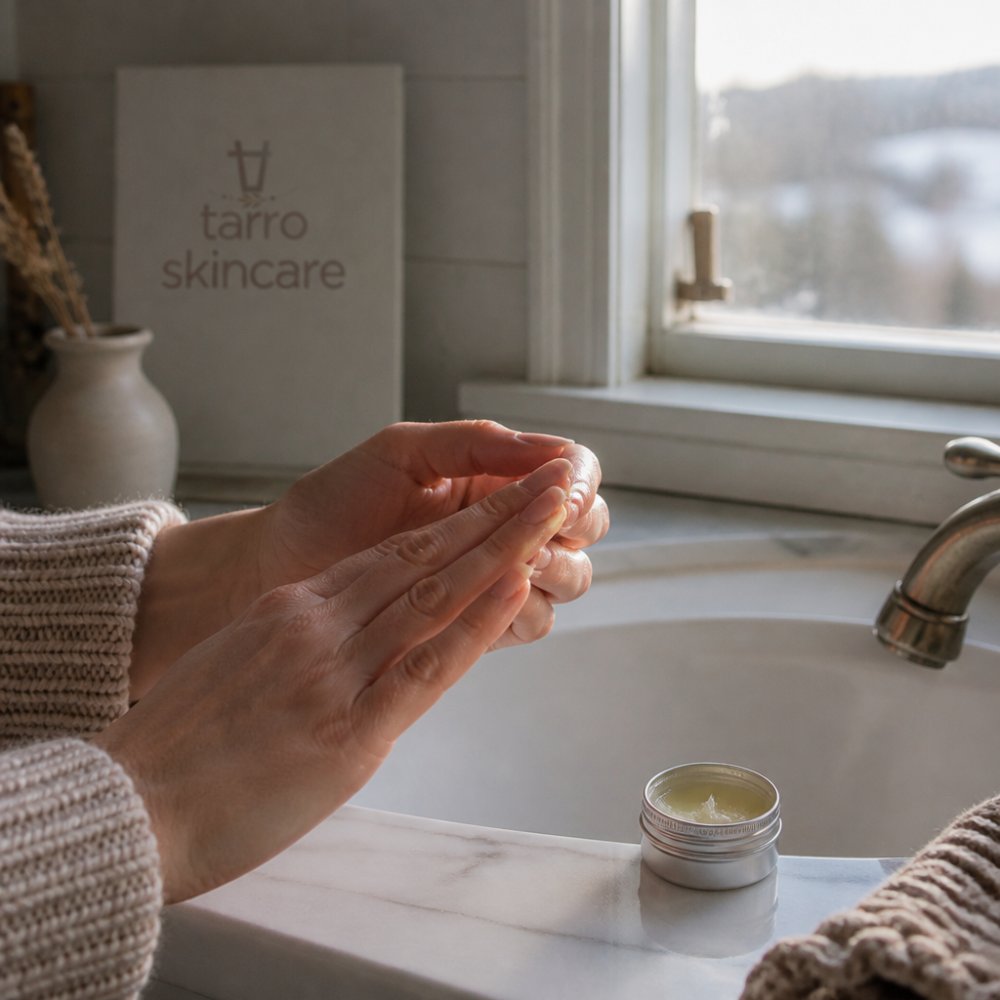
Here is the routine we would follow:
- Morning: apply a small amount of balm to the backs of the hands after washing, while skin is still slightly damp.
- Through the day: reapply after every handwash rather than waiting for hands to feel tight. Prevention beats repair.
- Evening: cleanse gently, then apply a thicker layer of balm to hands, knuckles and cuticles before bed.
- Once a week: use a richer balm on the whole hand and leave it to absorb while you watch something.
If you are weighing up which type of moisturiser suits dry, sensitive skin, our comparison of tallow versus plant-based moisturisers sets out the differences honestly.
Choosing a Balm for Your Hands This Winter
Choosing a hand balm comes down to three questions: how dry your hands get, how often you can reapply, and whether your skin reacts to fragrance. Answer those and the shortlist writes itself.
For most people, a fragrance-free balm with a short ingredient list is the safest starting point. If your hands are very dry or you are outdoors a lot, choose one with beeswax so the barrier survives a cold walk. If you want a balm for home and one for your bag, a bundle is the practical way to buy.
Our Bare Skin Balm is a no-water, no-fragrance tallow balm, with tallow, jojoba, olive oil, olive squalane and beeswax in its formula. If you would rather stock up, the Little and Large Balm Bundle pairs an 80g tin for home with a 30g tin for your bag.


Best for: dry, sore or barrier-stressed hands that need a simple, rich balm. Skip if: you want a light lotion you can apply without thinking, because a balm is a deliberate step.
Winter will strip your hands faster than any balm can keep up if you only apply it once a day, so the real challenge is consistency. Tarro offers a range of balms made with grass-fed British tallow, a lipid-rich base that supports the skin's natural barrier. Our balms are traceable back to the farms we work with, and simple to use as part of everyday hand care. Get started with Tarro and give your hands a barrier they can rely on through the cold months.
Frequently Asked Questions
What are the main causes of dry, cracked hands in winter?
Cold air holds less moisture, and indoor heating pulls more of it out of the air. Your hands also lose oil every time you wash them, and hot water strips the skin barrier faster than lukewarm water. Wind and repeated wet-to-dry cycles make it worse. The result is transepidermal water loss, where moisture escapes through a weakened barrier, leaving skin tight, rough and prone to cracking at the knuckles and fingertips.
Which natural oils are best for dry winter hands?
Jojoba, almond, argan and olive oil are the most reliable choices for dry winter hands.
Is shea butter good for dry, cracked hands?
Yes, shea butter is one of the better natural ingredients for cracked hands because it is rich in stearic and oleic acids and stays on the skin longer than most lotions. It works best as the middle layer of a routine: apply a humectant first, then a butter or balm to seal it in. For very cracked skin, a beeswax-based balm holds better through handwashing than shea butter alone.
How often should I moisturise dry hands in winter?
Apply a hand balm after washing your hands and again before bed, reapplying through the day as your hands need it.
What should I avoid if my hands are dry and sensitive?
If your hands are cracked and bleeding, or itchy and spreading, see a pharmacist or GP rather than layering on more products.


